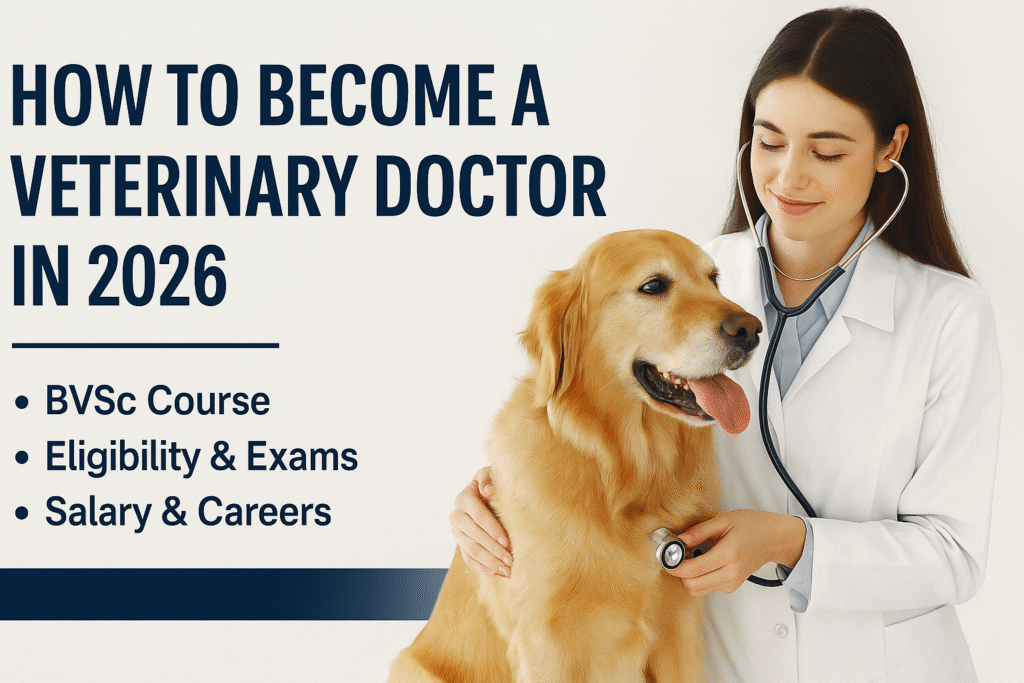
Becoming a veterinary doctor is one of the most respected and meaningful careers in India. If you love animals, want a medical career, and wish to work for livestock, pets or wildlife, then the BVSc & AH (Bachelor of Veterinary Science and Animal Husbandry) course is the official path.
This 2026 guide explains eligibility, entrance exams, fees, colleges, cut-offs, skills, job roles, salary, and the complete step-by-step process to become a veterinary doctor in India.
1. Who is a Veterinary Doctor?
A veterinary doctor (veterinarian) is a licensed animal doctor who:
- Diagnoses and treats animal diseases
- Performs surgeries
- Provides vaccinations
- Manages livestock farms
- Protects public health (One Health)
- Involves in research, breeding and animal welfare
To legally work as a vet in India, you must complete BVSc & AH and get registered with the State Veterinary Council.
2. Minimum Eligibility to Become a Vet Doctor
To enter BVSc in 2026:
✔ Educational Qualification
- Completed 12th standard with Physics, Chemistry, Biology
- Minimum marks: 50% (general)
- 40% for SC/ST/OBC (varies by state)
✔ Age Limit
- Minimum: 17 years (as on 31 December 2026)
- Upper age: 25 years (relaxation for reserved categories)
✔ Entrance Exam
From 2026, NEET-UG is required for admission into all government & private veterinary colleges in India.
3. Entrance Exam Required (2026 Updated)
🎯 NEET-UG → Mandatory for all BVSc seats (2026 onwards)
Your NEET biology score plays a big role in getting a government BVSc college.
Expected Cut-off Trend (Government Colleges)
- General: 510–550
- OBC: 470–500
- SC/ST: 350–400
- EWS: 480–510
State-wise counselling also uses NEET rank.
4. Course Details – BVSc & AH (5.5 Years)
Duration: 5.5 years (4.5 academic + 1 year internship)
Subjects You Will Study:
- Anatomy
- Physiology
- Pathology
- Parasitology
- Medicine
- Surgery & Radiology
- Gynecology & Obstetrics
- Animal Nutrition
- Veterinary Public Health
- Livestock Production & Management
- Epidemiology
Internship Includes:
- Pet clinics
- Farm visits
- Disease investigation
- Artificial insemination
- Meat inspection
- Vaccination camps
5. Top Veterinary Colleges in India (2026)
⭐ ICAR-Approved Government Veterinary Colleges
- TANUVAS – Chennai, Namakkal, Orathanadu
- Kerala Veterinary & Animal Sciences University
- Karnataka Veterinary University
- LUVAS – Haryana
- Bihar Veterinary College
- Bombay Veterinary College
- West Bengal University of Animal Sciences
- Assam Agricultural University
- Rajasthan University of Veterinary Sciences
Government seats offer the best education + lowest fees.
6. Fees (2026 Updated)
Government Colleges:
- ₹20,000 – ₹60,000 per year
Private Colleges:
- ₹1.5 lakh – ₹3.5 lakh per year
- Hostel: ₹60,000 – ₹1,00,000 yearly
Scholarships are available for SC/ST/OBC/EWS students.
7. How to Become a Veterinary Doctor – Step-by-Step (2026)
Step 1: Complete 12th with Biology
Take Physics, Chemistry, Biology in higher secondary.
Step 2: Prepare for NEET (6–12 months)
Focus on NCERT Biology for high scoring.
Step 3: Appear for NEET-UG
Aim for 500+ marks for safe cut-off.
Step 4: Apply for All-India or State Veterinary Counselling
- ICAR All India Quota (15%)
- State Counselling (85%)
Step 5: Choose a Veterinary College
Government seats preferred for training & exposure.
Step 6: Complete 5.5-Year BVSc & AH Course
Step 7: Finish One-Year Internship
Practical training is compulsory.
Step 8: Register with the State Veterinary Council
Then you can legally practice.
🎉 After this, you officially become a Veterinary Doctor (VETERINARIAN).
8. Skills Needed for a Successful Vet Career
- Strong biology knowledge
- Patience and compassion for animals
- Good communication
- Ability to handle emergencies
- Diagnostic & surgical skills
- Interest in fieldwork (farm visits, disease investigation)
9. Career Options After Becoming a Veterinary Doctor (2026)
✔ Government Jobs
- Veterinary Assistant Surgeon (VAS)
- Livestock Inspector
- Veterinary Officer
- Animal Husbandry Department
- Dairy Development Department
- Disease Investigation Officer
- Government veterinary hospitals
✔ Private Sector
- Pet hospitals
- Dairy farms
- Poultry farms
- Animal nutrition companies
- Pharmaceutical companies
- Zoos & wildlife centers
✔ Research & Higher Studies
- MVSc (19+ specializations)
- PhD
- Public Health (One Health)
- Epidemiology
✔ Self-Employment
- Own pet clinic
- Own dairy/poultry farm
- Pet pharmacy
- AI (Artificial Insemination) centre
10. Salary of Veterinary Doctors in India (2026)
Freshers:
- ₹30,000 – ₹45,000 / month (private)
- ₹56,000 – ₹70,000 / month (government)
After experience:
- ₹80,000 – ₹1,20,000+
Specialists (Surgery, Radiology, Reproduction):
- ₹1.5 lakh – ₹3 lakh per month
11. Is Veterinary a Good Career in 2026?
✔ Huge demand for veterinarians
✔ High job security (especially govt)
✔ Livestock sector growing fast in India
✔ Pet industry booming
✔ Strong “One Health” importance after COVID
If you love animals and want a medical career with strong growth, veterinary science is one of the best career choices in 2026.
Final Summary
To become a veterinary doctor in India in 2026:
- Study 12th Bio
- Clear NEET
- Join BVSc & AH
- Complete 5.5 years
- Finish internship
- Register as vet
- Choose govt / private / clinical path
This career gives respect, stable income, and the chance to save animal lives every day.
More Articles You May Like