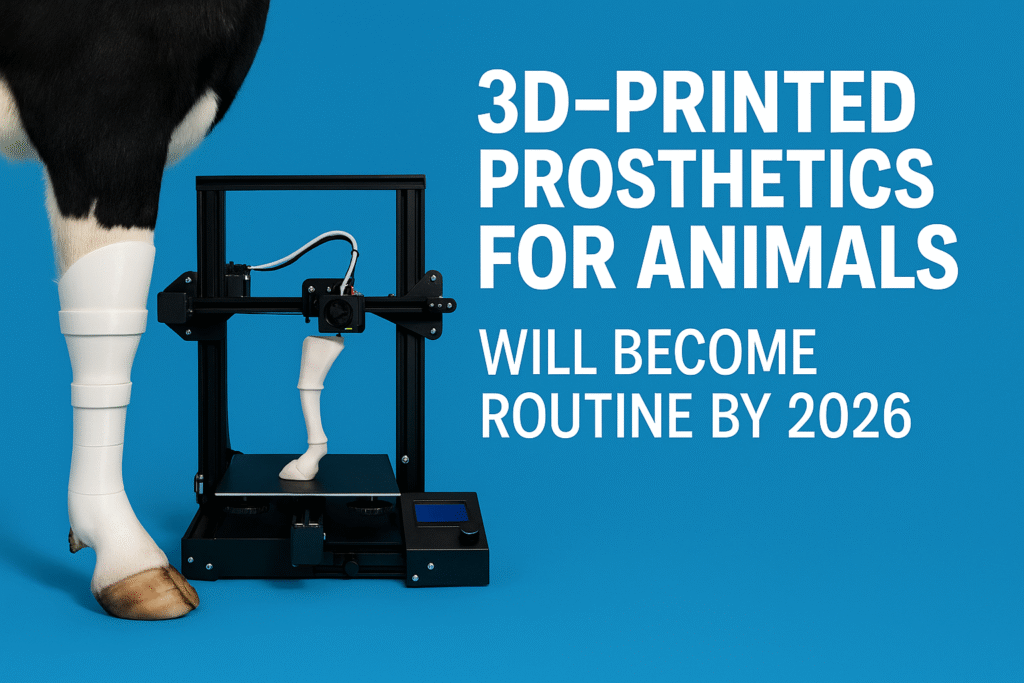
3D-printing has transformed human healthcare in the last decade, and the same technology is now moving rapidly into India’s veterinary sector. By 2026, 3D-printed prosthetic limbs, beaks, hoofs and shells will become routine treatments in many veterinary hospitals, universities, and wildlife rehabilitation centres.
This shift is driven by faster printing methods, lower production costs, and increasing success stories from veterinary surgeons.
Why 3D Printing Is Becoming a Game-Changer in Veterinary Medicine
3D-printed prosthetics offer several advantages compared to traditional metal or plastic supports:
● Perfect Fit for Each Animal
Every injured leg, paw, hoof, or wing is scanned using 3D imaging.
The prosthetic is then printed to match the exact shape and size of the animal’s body part, which improves comfort and movement.
● Low Cost and Fast Production
What earlier took weeks and high manufacturing costs can now be produced within 6–24 hours at a fraction of the cost.
● Lightweight and Safe Materials
Modern prosthetics use:
- medical-grade polymers
- flexible TPU
- silicone-based resins
These materials are durable, washable, and comfortable for long-term use.
Which Animals Will Benefit the Most?
3D-printed prosthetics are already helping many species, and by 2026, they will become common for:
1. Dairy Cattle and Farm Animals
Cows, buffaloes, goats, and horses often face injuries like:
- hoof fractures
- limb deformities
- road accidents
- tendon damage
3D-printed hoof shoes and leg supports will allow faster healing and reduce lameness, improving milk yield and mobility.
2. Pets – Dogs and Cats
For pets suffering from:
- congenital limb deformity
- amputated legs
- paw injuries
- spinal issues
3D prosthetic legs, wheel supports, and braces will help them walk naturally again.
3. Wildlife and Birds
India’s wildlife rehabilitation centres will commonly use 3D printing for:
- bird beak repair (parrots, eagles, hornbills)
- turtle shell reconstruction
- prosthetic wings
- leg supports for deer & monkeys
This technology increases survival chances and allows injured animals to return to the wild.
Why It Will Become Routine by 2026
● Veterinary Colleges Are Already Training Students
Institutions like veterinary universities under ICAR are introducing:
- 3D anatomy modelling
- printing splints and prosthetics
- biomechanics and design training
This ensures the next generation of vets can design and fit prosthetics easily.
● Startups and NGOs Are Printing at Low Cost
Animal welfare groups and startups are investing in:
- 3D scanning
- portable printers
- ready-made templates for common injuries
Affordable printing will make prosthetics accessible even in rural clinics.
● Government & CSR Support
CSR-funded mobile prosthetic vans and district hospitals will adopt 3D printing to provide faster rehabilitation for injured cattle and community dogs.
● Proven Success Cases
India has already seen successful:
- 3D-printed beaks for injured birds
- prosthetic limbs for dogs hit by vehicles
- hoof caps for lame cattle
These real-world results encourage hospitals to adopt the technology widely.
How a 3D-Printed Prosthetic Is Made (Simple Process)
- Scan the injured area using a 3D scanner or smartphone app
- Create a model in software to design the perfect fit
- Choose safe materials (TPU, resin, polymer blends)
- Print the prosthetic through a 3D printer
- Fit and adjust using straps, hinges, or cushioning
- Train the animal gradually to walk with the new device
- Follow up to ensure comfort and Healing
This entire process may take only 1 to 3 days.
Impact on Farmers, Pet Owners, and Wildlife Centres
● Farmers
- Reduced financial loss due to lameness
- Faster return to milk production
- Better mobility for working animals
● Pet Owners
- Dogs and cats regain normal walking
- Lower surgery costs
- Customized, comfortable fit for long-term safety
● Wildlife Teams
- Life-saving prosthetics for birds and reptiles
- Faster recovery time
- Greater success in releasing animals back into forests
By 2026: What Will Be Common in Vet Hospitals?
- 3D-printed limb prosthetics for cows and dogs
- Hoof guards and orthopaedic shoes
- Spine braces for paralyzed pets
- Beak reconstruction for injured birds
- Shell repair for turtles
- Custom-fit slings and rehabilitation supports
Most veterinary hospitals will have in-house or tie-up 3D printing labs, making prosthetics part of regular treatment.
Conclusion
By 2026, 3D-printed prosthetics will no longer be rare or experimental—they will become routine and widely accessible in India’s veterinary hospitals.
This technology promises:
- improved mobility
- reduced suffering
- lower treatment costs
- better rehabilitation outcomes
For cows, dogs, wildlife, and birds, 3D printing represents a major transformation in animal care and recovery.
More Articles You May Like