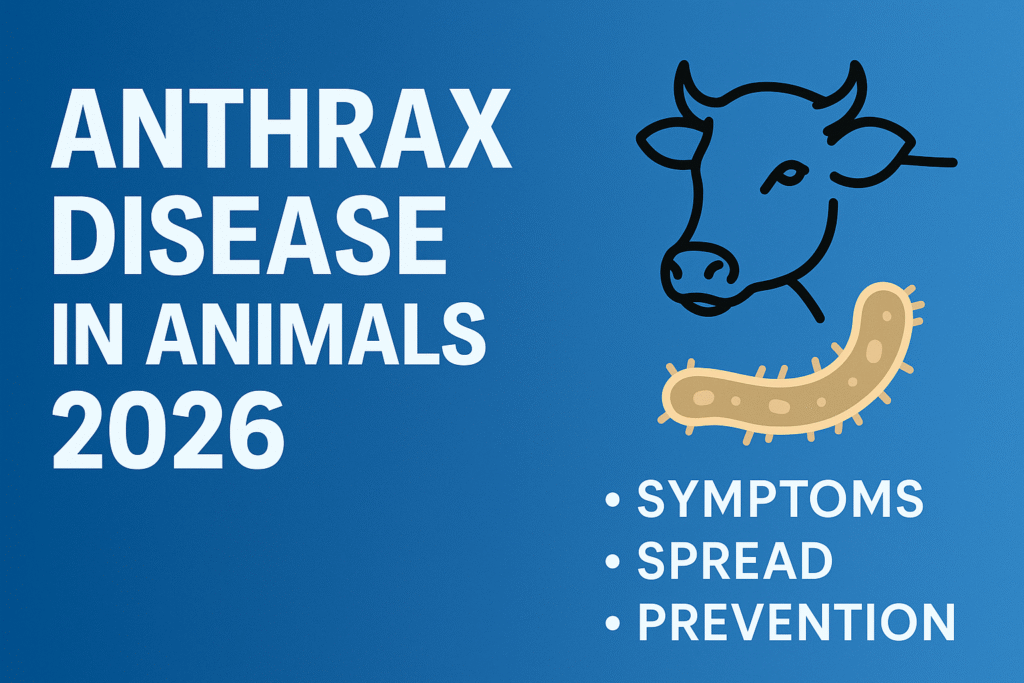
Anthrax is a serious infectious disease that affects cattle, sheep, goats, horses, and several wildlife species. Even though it is rare, outbreaks can occur suddenly, especially in regions with old contaminated soil.
This 2026 updated guide explains everything farmers, livestock owners, and students must know about anthrax in animals — its cause, symptoms, spread, prevention, vaccination rules, and safe handling practices.
This article uses simple English and covers only the information that is necessary for awareness and safety.
Table of Contents
What Is Anthrax Disease in Animals?
Anthrax is caused by a bacteria called Bacillus anthracis.
The bacteria produce spores that can survive in soil for decades. Animals usually get infected when they:
- graze on contaminated soil
- drink contaminated water
- inhale spores during dry, dusty weather
Anthrax affects both wild and domestic animals. If not detected early, it can cause sudden death in livestock.
Why Anthrax Still Matters in 2026
Even with vaccination and awareness, anthrax remains important because:
- Spores stay in soil for many years
- Heavy rains followed by dry heat can activate spores
- Animals graze close to the ground and get exposed
- Untreated carcasses contaminate soil further
- Wildlife movement spreads spores to new areas
- Climate changes increase outbreak patterns
Early detection and correct management help prevent big losses.
Animals Commonly Affected
Anthrax affects many domestic and wild species:
Highly Susceptible
- Cattle
- Sheep
- Goats
- Buffaloes
Moderately Susceptible
- Horses
- Camels
- Pigs
Wildlife
- Deer
- Antelope
- Elephants
- Wild herbivores near forest edges
How Anthrax Spreads Among Animals
The disease does not spread from animal to animal like a viral infection.
It spreads mainly through the environment:
✔ 1. Soil contamination
Spores enter the body through grazing or wounds.
✔ 2. Eating contaminated feed
Carcasses not disposed properly can contaminate land.
✔ 3. Inhalation of spores
Dry seasons or dust storms increase risk.
✔ 4. Water contamination
Ponds, lakes, and slow-flowing rivers can carry spores.
✔ 5. Carnivores eating infected meat
Dogs and wildlife predators get infected through carcasses.
Proper carcass management and vaccination prevent most outbreaks.
Symptoms of Anthrax in Animals (2026 Updated)
Anthrax has two forms: Peracute (very rapid) and Acute.
Peracute – Sudden death form
Common in cattle and sheep.
Signs include:
- Sudden collapse
- Blood oozing from nose, mouth, anus (dark & non-clotting)
- Swollen abdomen
- No struggle before death
Acute – Recognizable symptoms
Seen in goats, horses, pigs.
- High fever
- Difficulty breathing
- Swelling of neck or belly
- Weakness
- Loss of appetite
- Bloody diarrhea
- Milk drop in cattle
If these signs appear in a region known for anthrax, immediate veterinary help is needed.
What Farmers Must Do Immediately
When animals show symptoms or die suddenly:
✔ Do NOT open the carcass
Cutting the body exposes spores to air and increases risk.
✔ Inform veterinary authorities immediately
Rapid response stops the spread.
✔ Keep all animals away from the area
Restrict grazing and water access.
✔ Mark and isolate the spot
Nobody should step in the affected zone.
✔ Avoid touching the animal
Personal protective measures are essential.
Authorities will manage disposal and control measures safely.
Prevention of Anthrax in Animals (2026 Guide)
Prevention is the safest and most effective method.
1. Annual Vaccination
Live spore vaccines are widely used in endemic areas.
Vaccination is usually done before monsoon each year.
2. Avoid grazing in high-risk zones
Old burial grounds or history of outbreaks must be avoided.
3. Proper carcass disposal
Dead animals must be:
- not opened
- burned or buried deeply
- covered with lime powder
This stops spores from spreading.
4. Maintain clean water sources
Do not let animals drink from stagnant or muddy water sources.
5. Report sudden deaths quickly
Early reporting reduces further contamination.
6. Disinfect contaminated areas
Use approved disinfectants under veterinary guidance.
Treatment Approach (Veterinary Supervision Required)
Treatment is possible only if the disease is caught early.
Veterinarians use specific antibiotic protocols for suspected animals.
Important note:
Treatment must follow official guidelines. Owners should not attempt self-treatment.
Early reporting → early action → lives saved.
Anthrax in 2026 – What’s New?
Several improvements and monitoring systems enhance safety:
✔ Climate-based outbreak prediction
Weather data helps predict spore activation seasons.
✔ Faster laboratory diagnosis
Modern labs detect anthrax bacteria quickly.
✔ Mobile veterinary units
Rapid field response to sudden animal deaths.
✔ Better awareness in rural areas
Training farmers, students, and field workers reduces risk.
✔ Strict carcass disposal rules
State departments now enforce safe burial/burning.
✔ Vaccination mapping
District-wise vaccination coverage to identify gaps.
These steps aim to prevent outbreaks in 2026 and beyond.
| Animal Type | Risk Level | Common Symptoms |
|---|---|---|
| Cattle | High | Sudden death, bleeding |
| Sheep / Goats | High | Fever, collapse, swelling |
| Horses | Medium | Breathing issues, swelling |
| Pigs | Medium | Throat swelling |
| Wild Herbivores | High | Sudden death |
More Articles You May Like