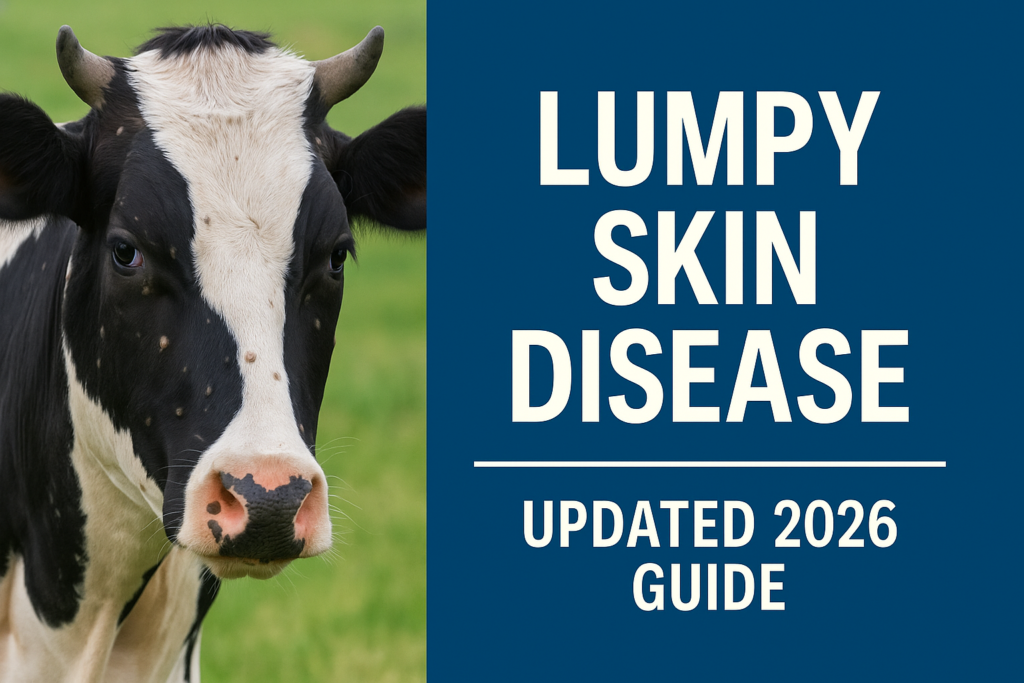
Lumpy Skin Disease (LSD) continues to affect cattle across several regions in India. First identified decades ago, the disease has now become a recurring seasonal threat, especially during monsoon and post-monsoon periods.
This updated 2026 guide explains what LSD is, how it spreads, symptoms to watch for, current treatment approaches, available vaccines, prevention strategies, and what farmers should do during an outbreak.
What Is Lumpy Skin Disease?
Lumpy Skin Disease is a viral infection caused by the Lumpy Skin Disease Virus (LSDV), which belongs to the Capripoxvirus family.
It mainly affects:
- Cows
- Buffaloes
The disease does not affect humans. It spreads quickly among cattle, leading to skin nodules, fever, reduced milk output, and complications if not managed early.
How Lumpy Skin Disease Spreads
LSD spreads mostly through:
- Biting insects (mosquitoes, flies, mites)
- Direct contact with infected cattle
- Contaminated equipment or surfaces
- Shared feeding or water areas
- Movement of animals during active outbreaks
Because insects are a major source, cases rise in humid weather.
Key Symptoms of Lumpy Skin Disease
Farmers should look for early signs such as:
- High fever
- Reduced appetite
- Swollen lymph nodes
- Nodules on skin (2–5 cm, hard and raised)
- Salivation
- Nasal discharge
- Drop in milk production
- Pain while walking or standing
- Difficulty chewing if nodules reach the mouth
In severe cases, nodules can ulcerate and attract secondary infections.
Which Animals Are at Higher Risk?
- Crossbred cattle
- Young animals
- Lactating cows
- Animals under nutritional stress
- Cattle exposed to mosquito-dense areas
Buffaloes may show milder symptoms but can still spread the virus.
2026 Situation Update
In 2026, many states have strengthened surveillance, vaccination, and vector control measures. Key updates include:
Better Vaccine Coverage
More cattle have been vaccinated under government programs, improving herd immunity.
Fewer Severe Outbreaks
Regions with regular vaccination and insect-control programs reported reduced mortality.
Early Detection Systems
Veterinary departments now monitor skin lesions, fever clusters, and sudden milk drops more effectively.
Improved Reporting
Digital mobile-based reporting helps faster containment.
Available Vaccines for LSD (2026 Update)
LSD vaccines do not treat the disease; they prevent future infections.
Commonly used vaccines include:
- Capripox vaccine
- Homologous LSD vaccine formulations under government programs
Vaccination is recommended for:
- All cattle older than 4 months
- Non-pregnant animals
- Animals at least 28 days before monsoon season
Boosters depend on state guidelines.
Is Lumpy Skin Disease Treatable?
There is no direct antiviral medicine for LSD. Treatment focuses on:
- Reducing fever
- Managing pain
- Preventing secondary bacterial infections
- Supporting wound healing
- Hydration and nutrition
Veterinarians often prescribe:
- Anti-inflammatory drugs
- Antibiotics (to control secondary infection, not virus)
- Wound-care sprays
- Vitamin and mineral supplements
Timely medical care prevents complications.
Recovery Time
Most cattle begin recovering within 10–20 days with proper care.
Severe cases may take up to 6 weeks.
Milk yield may drop during infection but usually returns to normal after recovery.
Complications to Watch For
- Deep skin ulcers
- Permanent skin scars
- Mastitis
- Pneumonia
- Severe weight loss
- Infertility (rare but possible)
Early veterinary attention reduces risks significantly.
What Farmers Should Do During an Outbreak
1. Separate sick cattle immediately
Reduces spread inside the farm.
2. Control insects
Use repellents, sprays, smoke, and remove stagnant water.
3. Clean sheds daily
Virus can survive on surfaces for several days.
4. Avoid buying or moving cattle
Transporting animals increases risk.
5. Maintain strong nutrition
Add minerals, vitamins, and clean water.
6. Contact a veterinarian immediately
Never use random medicines without advice.
Preventing Lumpy Skin Disease: 2026 Best Practices
- Vaccinate cattle before seasonal outbreaks
- Keep sheds dry and clean
- Use mosquito and fly control measures
- Quarantine new animals for 14 days
- Avoid sharing equipment between farms
- Monitor cattle daily for early symptoms
Farmers who follow these steps experience fewer losses.
Does LSD Affect Milk or Meat?
Milk from infected animals should not be sold until:
- Fever subsides
- Antibiotic withdrawal period is completed
- Animal recovers fully
Meat from infected animals is not recommended for consumption, even though LSD does not infect humans.
Impact on Farmers and the Dairy Sector
LSD can reduce farm income due to:
- Lower milk yield
- Temporary fertility issues
- Treatment costs
- Decreased market value of affected animals
Regular vaccination and insect control are currently the most reliable ways to limit these effects.
When to Contact a Veterinarian
Farmers should call a veterinarian if:
- Skin nodules appear suddenly
- Animals develop high fever
- Milk drops severely
- Breathing becomes difficult
- Nodules become infected or bleeding
Early intervention leads to faster recovery and less suffering.