Bluetongue disease is a viral illness that affects sheep, goats, cattle, buffaloes, and other ruminants. It is caused by the Bluetongue Virus (BTV), which spreads through biting midges (Culicoides species).
The disease does not spread directly from animal to animal, making vector control extremely important. As climate changes, new serotypes and wider midge activity have increased the disease risk in many regions in 2026.
This updated guide explains symptoms, transmission, diagnosis, treatment support, new vaccination updates for 2026, and farm-level prevention methods in clear, simple English.
Quick Overview Table (Google Discover-style Light Box)
| Topic | Key Points |
|---|---|
| Disease Type | Viral disease affecting ruminants |
| Main Cause | Bluetongue Virus spread by biting midges |
| Most Affected Species | Sheep (severe), goats & cattle (mild or silent infection) |
| Main Signs | Fever, swollen tongue, mouth ulcers, breathing difficulty |
| Season | Late monsoon to winter (when midges breed heavily) |
| 2026 Focus | New multivalent vaccine trials, improved vector-control methods |
What Is Blue Tongue Disease?
Bluetongue disease is caused by Orbivirus, a part of the Reoviridae family.
It affects sheep most severely, while cattle often act as silent carriers, helping the virus spread through biting midges.
Outbreaks typically occur in warm, humid climates where midges multiply rapidly.
The disease is not contagious through direct physical contact, and it does not infect humans. Meat and milk from recovered animals are safe when proper inspection guidelines are followed.
How the Disease Spreads
The only major route of spread is the bite of infected midges.
The midge picks up the virus from an infected animal and transmits it while biting another animal.
Key risk factors:
- Stagnant water and damp areas where midges breed
- Late monsoon and post-rainy seasons
- Presence of cattle near sheep flocks
- Movement of animals from infected regions
- Warm temperatures that increase midge activity
Because midges are tiny and can travel long distances with wind, the disease may appear suddenly in new areas.
Symptoms of Bluetongue Disease (2026 Update)
In Sheep (Most Affected)
Sheep show the most severe reaction. Symptoms include:
- High fever (40°C or above)
- Excess salivation and nasal discharge
- Swollen lips, face, and tongue
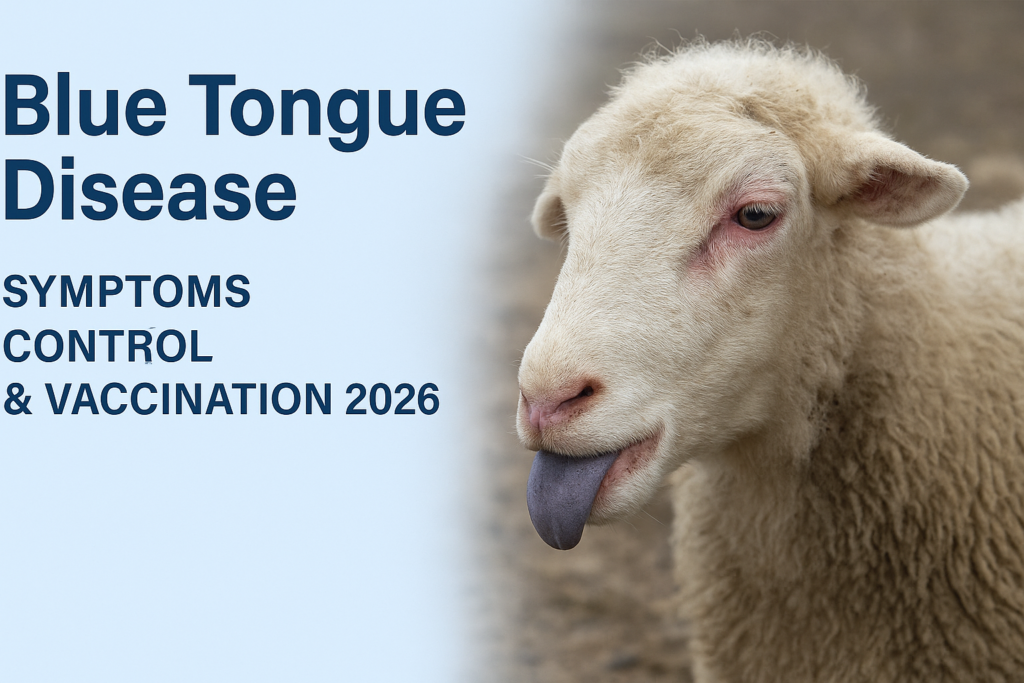
- Bluish tongue — seen in severe cases
- Mouth ulcers and difficulty eating
- Lameness due to swelling of the coronary band
- Breathing difficulty
- Weakness, depression, unwillingness to move
- Sudden death in acute cases
In Goats
Goats generally show mild symptoms:
- Low-grade fever
- Slight nasal discharge
- Occasional lameness
- Reduced milk yield
Many goats remain subclinical carriers.
In Cattle and Buffaloes
Cattle often show no visible signs, but some may develop:
- Fever
- Mild swelling around the mouth
- Redness of eyes
- Temporary infertility or reduced milk production
Even without symptoms, cattle can carry and transmit the virus to midges, making their management essential.
Complications of Blue Tongue Disease
If not controlled early, the disease may cause:
- Rapid dehydration
- Severe lung inflammation
- Secondary bacterial infections
- Hoof problems and long-term lameness
- Reproductive losses
- Wasting and poor growth in young animals
Mortality is highest in sheep, especially exotic and crossbred breeds.
Diagnosis Methods Used in 2026
Veterinary labs use updated diagnostic tools:
- RT-PCR: Most accurate for detecting viral RNA
- ELISA: Detects antibodies from current or past infection
- Virus isolation: For advanced lab studies
- Clinical examination: Based on symptoms and season
Field veterinarians combine clinical signs + regional outbreak pattern + lab confirmation for quick action.
Is There a Treatment for Blue Tongue Disease?
There is no direct antiviral medicine to kill the virus.
However, supportive care greatly reduces deaths.
Supportive Treatment Includes:
- Anti-inflammatory medicines to reduce fever and pain
- Antibiotics to prevent secondary infections
- Fluid therapy for dehydration
- Soft, easily digestible feed
- Shade and comfortable resting area
- Regular cleaning of mouth ulcers with mild antiseptic lotions
Sheep should be monitored twice daily during outbreaks.
Control Measures for Farmers in 2026
Preventing midge bites is the most effective control method.
Practical steps include:
1. Vector Control
- Use approved insect repellents on animals.
- Clean stagnant water sources where midges breed.
- Install fine-mesh netting in sheds during evening hours.
- Keep animals indoors during peak midge activity (sunset to sunrise).
- Use smoke or fans in sheds to reduce insect landing.
2. Farm Management
- Separate sheep from cattle during high-risk seasons.
- Avoid animal movement from infected districts.
- Provide balanced nutrition to improve immunity.
- Isolate affected animals immediately.
- Disinfect equipment and water troughs frequently.
3. Pasture & Environment Management
- Clear bushes and long grass around sheds.
- Improve drainage to avoid water-logging.
- Maintain dry bedding for sheep.
Vaccination Updates for 2026
Vaccination remains the strongest protection against Bluetongue.
Current Vaccines (India + Global Use)
- Monovalent vaccines for a single serotype
- Polyvalent vaccines covering multiple common serotypes
- Live attenuated vaccines used in some regions
- Inactivated vaccines preferred for safe use in pregnant animals
New 2026 Vaccine Developments
Researchers are developing:
- Next-generation multivalent vaccines covering more serotypes
- Recombinant vaccines with improved safety
- Region-specific strains to match local outbreaks
- Better thermostable vaccines for hot climates
These updates aim to reduce outbreak severity and improve long-term immunity.
Recommended Vaccination Schedule (2026)
Always follow local veterinary advice.
- Vaccinate before monsoon to build immunity ahead of midge season
- Booster doses based on vaccine type
- Pregnant animals should receive safe inactivated vaccines only
- Maintain proper vaccination records
- Avoid vaccinating sick or stressed animals
Bluetongue in 2026: Why Risk Is Increasing
Several factors are expanding the disease range:
- Climate change increasing midge breeding duration
- Movement of animals between states and countries
- New serotypes emerging in different regions
- Crossbred sheep populations more sensitive to the virus
Farmers must stay alert from July to December, especially in humid areas.
How Farmers Can Protect Their Flock in 2026
Daily Monitoring
- Check for fever, lameness, and mouth lesions
- Observe feeding patterns
- Inspect sheep during evening hours when midges are active
Emergency Measures During an Outbreak
- Move animals to higher, dry ground
- Provide clean drinking water
- Keep infected sheep in separate pens
- Call a veterinarian as soon as symptoms appear
Long-Term Strategy
- Annual vaccination
- Good husbandry practices
- Efficient drainage systems
- Separate housing for sheep and cattle
Economic Impact of Bluetongue Disease
The disease affects:
- Wool production
- Meat yield
- Milk production in dairy animals
- Reproductive performance
- Trade restrictions during outbreaks
Because cattle can carry the virus silently, controlling the disease in mixed farms becomes even more important.
More Articles You May Like