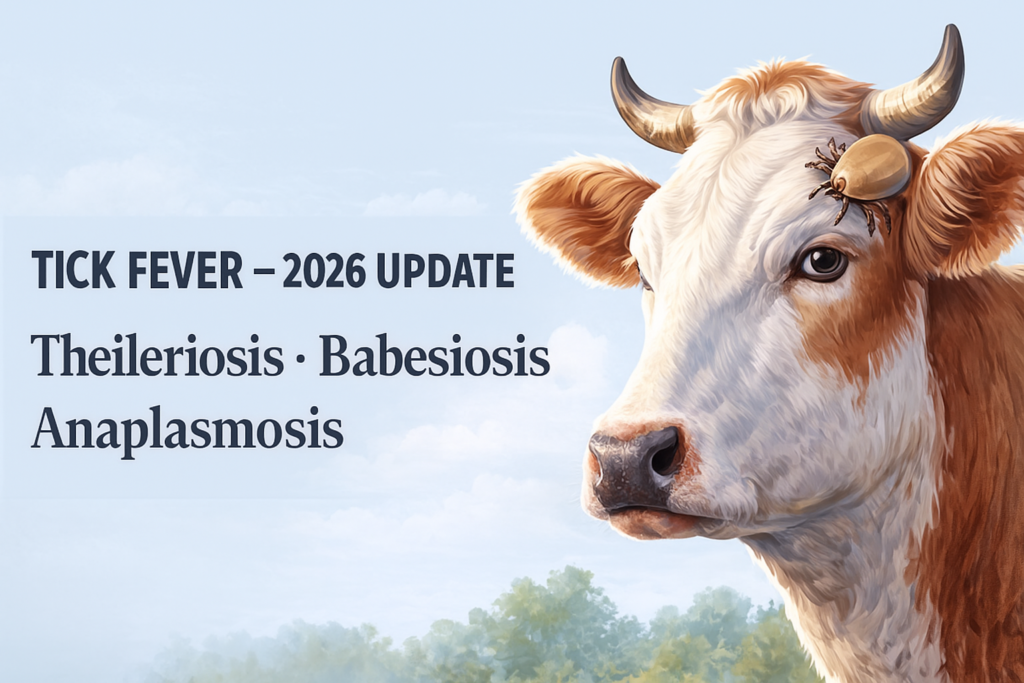
Tick fever is one of the most important livestock diseases affecting cattle, buffaloes, sheep, and goats in many parts of India. Three major infections fall under the common name “tick fever”:
- Theileriosis
- Babesiosis
- Anaplasmosis
All three diseases are spread mainly through ticks, which transmit parasites into the bloodstream. These diseases cause high fever, weakness, anemia, breathing trouble, and sudden death if not identified on time.
This 2026 guide explains everything in simple words — symptoms, transmission, diagnosis, treatment support, tick control, and prevention steps.
Table of Contents
Quick Overview Table (Light Discover-Style Box)
| Disease | Type of Parasite | Main Signs | High-Risk Season |
|---|---|---|---|
| Theileriosis | Protozoa (Theileria spp.) | Fever, swollen lymph nodes, breathing difficulty | Summer & Monsoon |
| Babesiosis | Protozoa (Babesia spp.) | Red/dark urine, high fever, anemia | Hot & Humid Weather |
| Anaplasmosis | Rickettsial organism | Jaundice, weight loss, severe anemia | Throughout the year where ticks are active |
What Is Tick Fever?
Tick fever is a group of diseases that spread when infected ticks bite the animal. Once the parasite enters the blood, it attacks red blood cells, causing severe weakness and organ stress.
Ticks thrive in:
- Hot climates
- Moist areas
- Poorly cleaned cattle sheds
- Overgrown grass and bushes
Because climate changes have increased tick populations, tick fever cases are rising in 2026.
How Tick Fever Spreads
Ticks pick up parasites while feeding on an infected animal.
They then transfer the infection to healthy animals.
The spread increases when:
- Cattle share grazing areas
- New animals are introduced without treatment
- Shed hygiene is poor
- Overgrown vegetation supports tick breeding
- Animals move from one district to another
Some species of ticks can survive for months without feeding, which makes control very difficult.
Common Symptoms of Tick Fever (2026 Update)
Tick fever symptoms vary depending on the parasite, but many signs overlap.
1. Theileriosis Symptoms
Caused by Theileria annulata (common in India) and Theileria parva in Africa.
- High fever
- Swollen glands (especially behind the shoulder and jaw)
- Difficulty breathing
- Coughing
- Weakness and loss of appetite
- Milk drop
- Pale or yellow eyes
- Death in severe cases
Young calves and high-yielding dairy cows are especially sensitive.
2. Babesiosis Symptoms
Caused by Babesia bigemina and Babesia bovis.
- Very high fever (41°C)
- Red or dark brown urine (classic sign)
- Rapid breathing
- Severe anemia
- Muscle tremors
- Weakness and collapse
Babesiosis often appears suddenly and can kill animals within 24–48 hours if untreated.
3. Anaplasmosis Symptoms
Caused by Anaplasma marginale and Anaplasma centrale.
- Gradual weakness
- Jaundice (yellow eyes and gums)
- Fever (mild to moderate)
- Weight loss
- Sudden drop in milk
- Severe anemia in advanced cases
Older animals show more severe symptoms than younger ones.
Diagnosis Methods Used in 2026
Veterinarians use updated diagnostic tools:
- Blood smear microscopy to identify parasites
- PCR testing for accurate detection
- ELISA to check past exposure
- Packed Cell Volume (PCV) to measure anemia
- Clinical signs combined with tick presence
Early diagnosis greatly improves survival.
Treatment and Supportive Care
The treatment differs for each disease. Only a veterinarian should prescribe medicines.
Theileriosis
- Anti-theilerial drugs
- Fever-reducing medicines
- Fluid therapy to prevent dehydration
- Nutrition support
- Monitoring breathing and lymph node swelling
Babesiosis
- Anti-babesial treatment
- Antipyretics for fever
- Blood transfusion in severe anemia cases
- Electrolyte therapy
- Protection from heat stress
Anaplasmosis
- Antibiotics specific to Anaplasma
- Vitamin supplementation
- Support for anemia
- Soft, high-energy feed
In all tick fever cases:
- Keep the animal in shade
- Provide clean drinking water
- Reduce stress
- Monitor temperature twice daily
Tick Control Measures for 2026
Controlling ticks is the most effective way to prevent these diseases.
1. Chemical Control
- Use approved acaricide sprays or pour-ons
- Treat all animals, not just the sick ones
- Rotate chemicals every few months to prevent resistance
- Dip tanks for large herds (only under expert guidance)
2. Shed & Environment Management
- Remove dung daily
- Keep floors dry
- Spray walls and cracks where ticks hide
- Cut grass and bushes near sheds
- Use lime or salt in cattle resting areas
3. Animal Management
- Quarantine new animals for 10–14 days
- Treat for ticks before mixing with herd
- Regular brushing and coat inspection
- Keep calves in cleaner, well-maintained areas
4. Biological Methods
- Use natural predators (where available)
- Improve organic matter management around farm compounds
Vaccination Updates for 2026
Theileriosis Vaccines
- Widely used in India
- Protect against Theileria annulata
- Helpful for crossbred cattle and high-yield dairy cows
- Long-term immunity after proper schedule
Babesiosis Vaccines
- Used in some regions
- Provide protection but may need seasonal boosters
Anaplasmosis Vaccines
- Used in limited regions
- Mostly herd-specific immunity programs
2026 Developments
- Improved vaccine stability
- New combination vaccines under research
- Region-specific vaccine programs improving
Always follow local veterinary advice for correct vaccine schedule.
High-Risk Seasons in 2026
Tick fever peaks during:
- March–June (summer)
- July–October (monsoon)
Moisture + heat = highest tick breeding.
How Farmers Can Prevent Tick Fever
Daily Monitoring
- Check ears, tail, udder, and neck for ticks
- Look for pale gums and weakness
- Watch for sudden fever
During Outbreaks
- Isolate affected animals
- Call a veterinarian immediately
- Reduce grazing in tick-infested fields
- Use acaricide treatment as advised
Long-Term Strategy
- Regular tick control
- Vaccination
- Herd health monitoring
- Good-quality feed and minerals
Economic Impact of Tick Fever
Tick fever leads to:
- Severe milk reduction
- Slower growth in calves
- High treatment cost
- Reduced fertility
- Death losses
- Lower market value
Effective tick management saves money and protects herd productivity.
More Articles You May Like