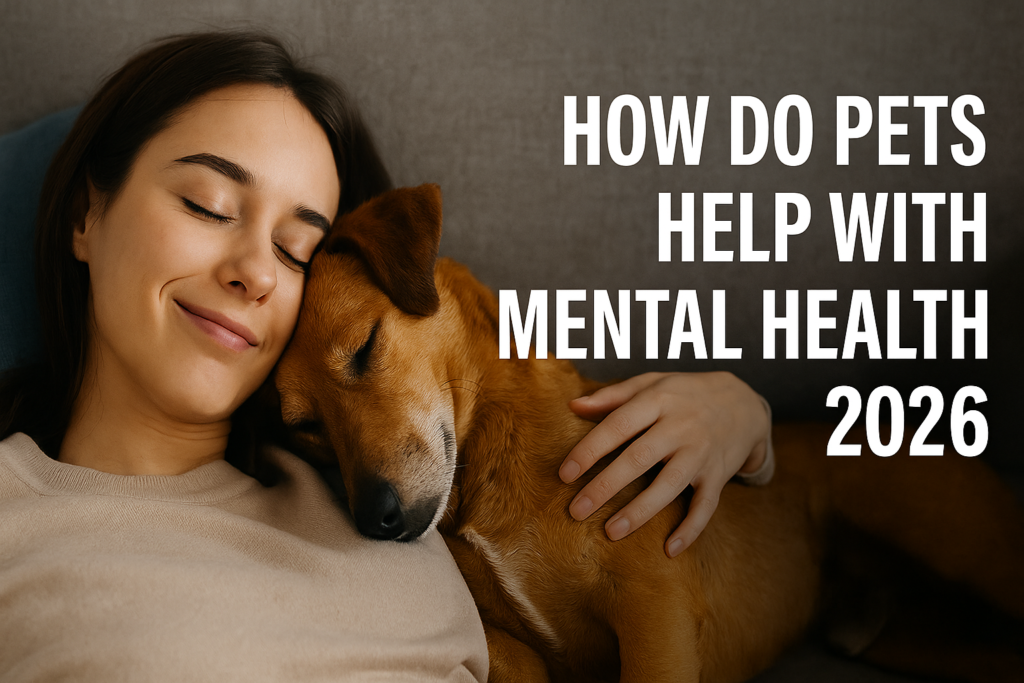
In 2026, pets are recognised as one of the strongest natural supports for emotional wellbeing. As stress, remote work fatigue, loneliness and digital overload increase, families, students and elderly people rely more on pets for comfort, stability and emotional relief.
Modern studies, therapy programs, and behavioural science all confirm that pets help lower stress, build emotional resilience and support healthier daily living.
This guide explains how pets improve mental health, why their impact is stronger in 2026, and what types of emotional benefits different animals provide.
Table of Contents
Why Pets Improve Mental Health — Scientific & Emotional Factors
| Mental Health Benefit | How Pets Help (2026) |
|---|---|
| Stress Relief | Reduces cortisol; improves relaxation through touch and routine |
| Loneliness Reduction | Provides companionship during remote work and urban isolation |
| Anxiety Control | Predictable routines and emotional grounding |
| Mood Improvement | Releases serotonin and oxytocin when interacting with pets |
| Social Confidence | Encourages conversations and outdoor interactions |
| Daily Structure | Walking, feeding, grooming create positive discipline |
1. Stress Reduction Through Touch and Presence
Petting or sitting near a dog, cat or even a rabbit naturally reduces the body’s stress hormones.
Touch creates:
• lower cortisol
• slower heart rate
• calmer breathing
This helps people manage daily tension and work pressure.
2. Strong Companionship in an Isolated World
Many people in 2026 live alone or work online. Pets give emotional continuity through:
• constant presence
• non-judgmental companionship
• comforting routines
This helps reduce loneliness and emotional disconnection
3. Natural Support for Anxiety
Pets help people manage anxiety by:
• providing predictable routines
• interrupting negative thought cycles
• offering grounding touch during episodes
• creating a sense of responsibility
Dogs especially help people shift focus from internal worry to external tasks.
4. Improved Mood and Emotional Balance
Daily interaction with pets increases:
• serotonin (happiness chemical)
• oxytocin (bonding chemical)
Small activities like feeding, brushing or walking create micro-moments of joy that naturally improve mood.
5. Better Sleep Patterns
Many pet owners report:
• lower nighttime anxiety
• easier sleep onset
• stable body rhythms
A pet’s presence can help reduce overthinking at night.
6. Increased Physical Activity = Better Mental Health
Walking or playing with pets leads to:
• more sunlight exposure
• more movement
• more outdoor time
These three elements strongly improve mental clarity and emotional strength.
7. Social Confidence & Reduced Shyness
Pets act as natural social connectors.
People feel more confident speaking to strangers when a dog or cat is present.
This helps:
• shy individuals
• new city residents
• elderly people
• students
Walking a dog often builds a small supportive community.
8. Support for Children & Teenagers
Pets help younger people by improving:
• emotional expression
• empathy
• responsibility
• confidence
In 2026, many therapists recommend pets for children facing emotional pressure or social anxiety.
Unique 2026 Insights — What Changed Recently
1. Digital Stress Relief
People overwhelmed by screens and notifications find calm through non-digital interactions with pets.
2. Work-from-home Burnout Recovery
Pets help break unhealthy work patterns by forcing:
• breaks
• stretches
• outside air
• moments of play
3. Emotional Stability for Students
Pets help students studying for long hours regulate mood and maintain focus.
4. Healing from Grief & Trauma
Emotional support from pets is now widely used in trauma recovery programs.
5. Senior Citizens & Mental Strength
Pets reduce isolation, confusion, and emotional decline in older adults.
Different Pets, Different Mental Health Benefits (2026)
Dogs
• highest emotional bonding
• strong anxiety relief
• structure, exercise, friendship
• ideal for people with depression or excessive stress
Cats
• calm indoor presence
• low-maintenance emotional support
• quiet comfort during stressful periods
Birds
• uplifting sounds
• active movement reduces sadness
• helps apartment residents
Rabbits & Small Pets
• gentle touch
• soothing grooming routines
• suitable for introverts or small homes
Hidden Benefits Most People Don’t Know
• Pets reduce the brain’s response to sudden stress triggers
• Touching a sleeping pet slows your breathing naturally
• Pets help regulate eating habits during emotional imbalance
• Watching pets play creates a “micro-break” for the mind
• Pets help shift focus away from negative thoughts
• Elderly owners show higher memory recall when interacting with pets
• Many workplaces in 2026 allow short “pet therapy breaks”
When Pets Help the Most
Pets provide major mental support during:
• loneliness
• exam stress
• breakups
• work pressure
• grief
• anxiety episodes
• emotional burnout
• retirement
My Recommendation
• Choose a pet whose energy level matches your lifestyle
• Maintain daily routines for stable emotional support
• Spend 10 minutes each day in quiet bonding time
• Use short walks or gentle play as mental reset moments
• Never adopt only for emotional reasons—long-term commitment matters
More Articles You May Like