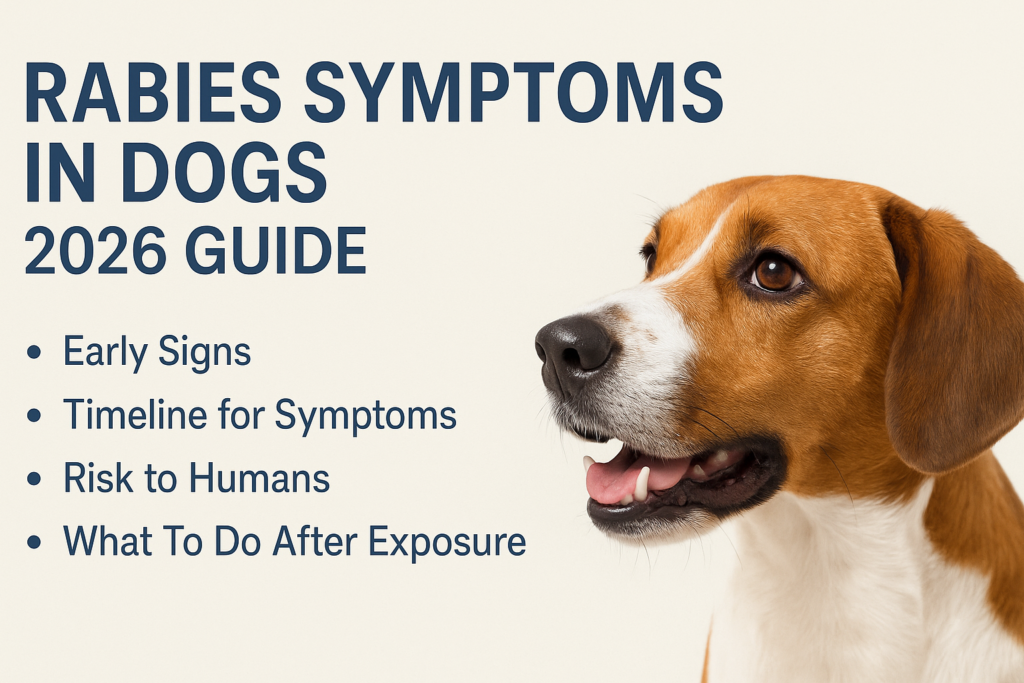
Rabies symptoms in dogs usually begin with subtle behavior changes such as anxiety, restlessness, fever, and loss of appetite. As the disease progresses, dogs may show aggression, excessive drooling, difficulty swallowing, paralysis, and seizures. Rabies symptoms can appear anywhere from two weeks to several months after infection, depending on the bite location and immune response. Early recognition and immediate action after exposure are essential because rabies is almost always fatal once symptoms begin.
Rabies is one of the most serious viral diseases affecting dogs and humans. Understanding rabies symptoms in dogs is critical because once symptoms appear, the disease is almost always fatal. In 2026, rabies remains a major public-health concern in many parts of the world, especially in areas with large stray dog populations.
This guide explains what rabies is, how it spreads, early and late symptoms, how long it takes for symptoms to appear, risk to humans, and what families should do after exposure—all in clear and simple language.
Table of Contents
What Is Rabies and Why It Is Dangerous
Rabies is a viral disease that attacks the central nervous system. It affects the brain and spinal cord of mammals, including dogs and humans.
Once rabies symptoms start, there is no effective cure. This is why early recognition, prevention, and immediate action after exposure are essential.
How Dogs Get Rabies
Dogs usually get rabies through:
- Bite from an infected dog or wild animal
- Saliva entering an open wound
- Scratches contaminated with infected saliva
- Contact with infected saliva through eyes, nose, or mouth
Rabies virus enters the body through nerves and slowly travels to the brain.
How Long Does Rabies Take to Show Symptoms in Dogs
One of the most confusing aspects of rabies is the delay between infection and visible illness.
Incubation Period in Dogs
- Usually 2 weeks to 3 months
- In rare cases, a few days or up to 6 months
- Depends on:
- Bite location (head bites show symptoms faster)
- Virus amount
- Dog’s immune strength
- Vaccination history
This delay is why a dog may look normal for weeks after being infected.
Early Symptoms of Rabies in Dogs (Initial Stage)
The early stage is subtle and often mistaken for minor illness or stress.
Common early signs
- Sudden behavior change
- Unusual fear or restlessness
- Anxiety or nervousness
- Fever
- Loss of appetite
- Vomiting
- Licking or chewing the bite area
- Sensitivity to light or sound
Many owners miss these signs because they do not look serious at first.
Light Overview: Rabies Progression in Dogs
| Stage | Main Signs | Risk Level |
|---|---|---|
| Early | Behavior change, fever, anxiety | High (often unnoticed) |
| Excitative | Aggression, biting, confusion | Very High |
| Paralytic | Weakness, paralysis, coma | Fatal |
Signs and Symptoms of Rabies in Dogs (Excitative Stage)
This is the most well-known stage and the most dangerous.
Typical signs
- Sudden aggression without cause
- Biting people, animals, or objects
- Excessive barking or growling
- Foaming or drooling at the mouth
- Difficulty swallowing
- Disorientation
- Wandering aimlessly
- Seizures
- Extreme sensitivity to noise or movement
At this stage, the dog can easily transmit rabies to humans.
Paralytic (Silent) Rabies in Dogs
Not all rabid dogs become aggressive. Some develop paralytic rabies, which is harder to detect.
Symptoms
- Weakness starting in hind legs
- Difficulty standing or walking
- Drooping jaw
- Inability to swallow
- Excessive drooling without aggression
- Gradual paralysis
- Breathing difficulty
- Coma
This form is equally fatal but often misdiagnosed.
What Are the First Symptoms of Rabies in Dogs
The first symptoms of rabies in dogs are usually behavioral rather than physical.
These include:
- Sudden fearfulness
- Avoiding family members
- Unusual attachment or clinginess
- Restlessness at night
- Unexplained crying or whining
These signs often appear before aggression or paralysis.
Dog Rabies Symptoms in Humans (Important for Families)
Humans do not get rabies directly from dogs unless exposed to saliva through:
- Bite
- Scratch
- Open wound
- Eyes, nose, or mouth
Early symptoms in humans
- Fever
- Headache
- Tingling or pain at bite site
- Fatigue
Later symptoms
- Anxiety
- Confusion
- Difficulty swallowing
- Fear of water
- Hallucinations
- Paralysis
Once symptoms appear in humans, rabies is also usually fatal.
What To Do If You Suspect Rabies in a Dog
Immediate steps
- Do not touch the dog with bare hands
- Keep distance from children and elderly
- Avoid saliva contact
- Isolate the dog safely
- Contact a qualified veterinarian or local animal health authority
Do not attempt home treatment.
What To Do After a Dog Bite (Family Safety Guide)
Pros of acting immediately
- Rabies can be prevented before symptoms appear
- Saves human life
- Reduces panic
- Protects other animals
Cons of ignoring or delaying
- Infection may progress silently
- High fatal risk
- Risk to family members
- Emotional trauma
After checking
If a dog bite occurs:
- Wash wound immediately with soap and running water for at least 15 minutes
- Apply antiseptic if available
- Seek medical attention without delay
- Follow medical advice strictly
This applies even if the dog looks healthy.
Can Vaccinated Dogs Get Rabies
Vaccination significantly reduces risk but no vaccine is 100% effective.
Factors include:
- Missed booster doses
- Improper vaccine storage
- Weak immune response
Any bite incident should still be taken seriously.
Why Rabies Is Still a Risk in 2026
- High stray dog population in many regions
- Low vaccination coverage in some areas
- Delayed reporting of bites
- Lack of public awareness
Rabies prevention depends on education and responsibility.
How Rabies Is Confirmed in Dogs
Rabies cannot be confirmed in a living dog through routine tests.
Confirmation is usually done:
- After death
- By laboratory examination of brain tissue
This is why prevention and observation are critical.
Prevention: The Only Protection Against Rabies
For dog owners
- Timely vaccination
- Booster doses as advised
- Avoid contact with unknown animals
- Supervise outdoor activity
For families
- Teach children not to touch stray dogs
- Report aggressive animals
- Keep wounds covered
- Seek medical care after any bite
Important Misunderstandings About Rabies
- Rabies is not caused by heat or food
- Rabies does not show symptoms immediately
- Not all rabid dogs act aggressive
- Home remedies do not work
- Waiting for symptoms is dangerous
Final Recommendation for Pet Owners and Families
Rabies is preventable but not curable once symptoms begin. Learning to recognize signs early, acting quickly after exposure, and maintaining vaccination schedules protect not only pets but also families and communities.
Understanding rabies symptoms in dogs helps people make safe decisions and prevents irreversible outcomes.
✅ Medical Disclaimer
This article is intended for general awareness and educational purposes only. It does not replace professional medical or veterinary advice, diagnosis, or treatment. Rabies is a serious disease, and symptoms can vary between animals and individuals. If a dog shows unusual behavior, is suspected of rabies, or if a bite or exposure occurs, contact a qualified veterinarian or healthcare professional immediately and follow official medical guidance.
In 2026, awareness remains the strongest defense against rabies. Knowing the warning signs, understanding how long rabies takes to show symptoms in dogs, and acting responsibly after exposure can save lives. Rabies symptoms in dogs should never be ignored, as early action protects pets, families, and society.
More Articles You May Like