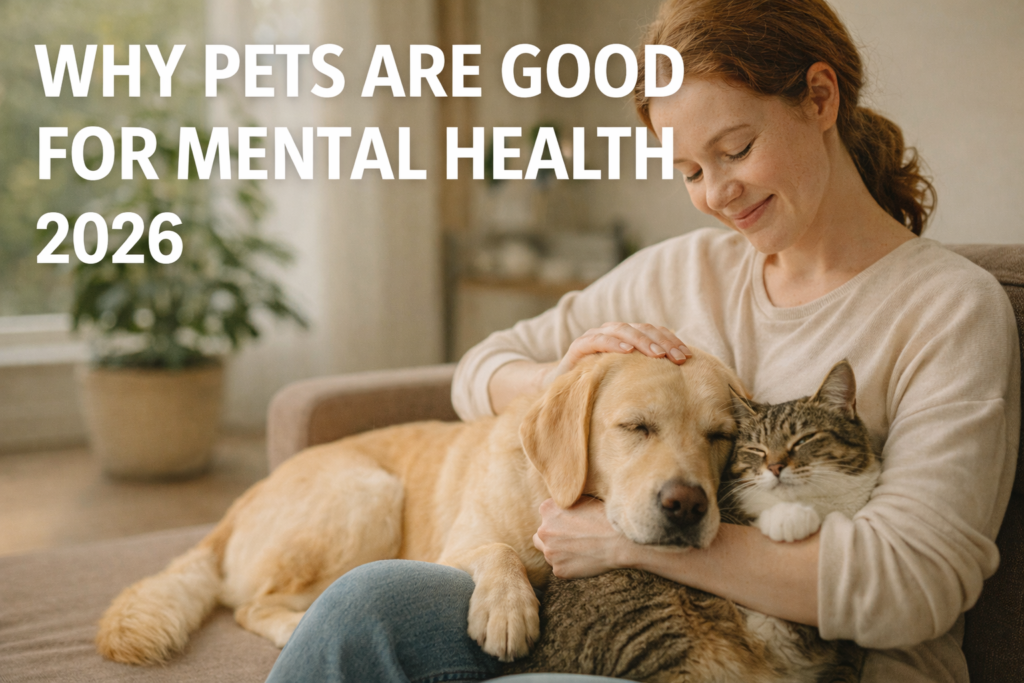
In 2026, mental health has become an important part of everyday life.
Many people now understand that emotional well-being is just as important as physical health. One reason pets continue to be valued across the world is their positive effect on mental health.
This article explains why pets are good for mental health, using simple language and real-life reasons that are easy to understand.
What Does Mental Health Mean in Daily Life?
Mental health is not only about illness or treatment.
It includes how a person:
- Feels emotionally
- Handles stress
- Manages loneliness
- Finds calm and balance
Good mental health helps people live peacefully, stay focused, and feel emotionally stable.
Quick Overview: How Pets Support Mental Health
This table gives a clear summary before deeper explanation.
| Benefit | How Pets Help | Common Pets |
|---|---|---|
| Stress reduction | Calming presence and routine | Dogs, cats |
| Emotional comfort | Non-judgmental companionship | Cats, rabbits |
| Loneliness relief | Sense of company and connection | All pets |
| Daily structure | Regular feeding and care routines | Dogs, birds |
| Positive mood | Joy through interaction | All pets |
Pets Reduce Feelings of Loneliness
One of the strongest mental-health benefits of pets is companionship.
Pets:
- Stay near their owners
- Respond with presence or affection
- Create a feeling that someone is always there
For people living alone or feeling emotionally disconnected, pets help reduce loneliness in a natural way.
Pets Help Manage Daily Stress
Modern life in 2026 can feel fast and demanding.
Pets help slow things down.
Simple actions such as:
- Watching a pet rest
- Gently touching a pet
- Spending quiet time together
can reduce mental tension and help the mind relax.

Emotional Comfort Without Pressure
Pets do not judge, argue, or demand explanations.
This makes them emotionally comforting.
People often feel safe sharing space with pets because:
- There is no expectation to talk
- Emotions are accepted silently
- Presence alone feels supportive
This quiet support helps emotional balance.
Pets Create a Sense of Purpose
Caring for a pet gives people:
- A reason to wake up
- A responsibility to fulfill
- A feeling of being needed
This sense of purpose is especially helpful for:
- Older adults
- People living alone
- Individuals feeling emotionally low
Having a pet encourages responsibility without pressure.
How Pets Influence Mental Health in Different Ways
| Mental Health Area | Role of Pets | Positive Effect |
|---|---|---|
| Stress | Calm companionship | Reduced tension |
| Anxiety | Predictable routine | Emotional stability |
| Loneliness | Constant presence | Sense of connection |
| Mood balance | Positive interaction | Improved outlook |
| Daily motivation | Care responsibility | Purpose and focus |
Pets Encourage Healthy Daily Routines
Pets need regular care.
This helps owners maintain daily habits such as:
- Waking up on time
- Staying active
- Eating regularly
Routine supports mental health by creating structure and predictability.
Pets Support Emotional Expression
Many people feel comfortable expressing emotions around pets.
Pets:
- Listen without reacting negatively
- Accept human emotions quietly
- Provide comfort through presence
This helps people process emotions safely.
Pets Help Reduce Screen Dependence
In 2026, screen time is high for all age groups.
Pets encourage:
- Physical movement
- Real-world interaction
- Time away from digital devices
This balance supports mental clarity and emotional calm.
Pets and Children’s Mental Well-Being
Children who grow up with pets often learn:
- Empathy
- Emotional awareness
- Gentle responsibility
Pets help children feel safe, understood, and emotionally supported.
Pets and Older Adults
For older adults, pets:
- Reduce feelings of isolation
- Create daily companionship
- Support emotional stability
Even calm pets can provide meaningful emotional comfort.
Common Misunderstandings About Pets and Mental Health
- Pets replace professional help → Pets support well-being but do not replace care
- Only dogs help mental health → All pets can provide comfort
- Pets remove stress completely → Pets help manage stress, not eliminate it
Understanding these points keeps expectations healthy.
Things to Consider Before Relying on Pets for Mental Well-Being
Before keeping a pet, people should think about:
- Time and care ability
- Long-term commitment
- Emotional responsibility
A healthy relationship with pets is based on care, patience, and respect.
Final Thoughts: Why Pets Matter for Mental Health in 2026
Pets support mental health by offering:
- Companionship
- Emotional comfort
- Daily structure
- A sense of purpose
In a world that often feels busy and overwhelming, pets provide something simple and powerful: calm presence.
That is why pets continue to play an important role in mental well-being in 2026.
More Articles You May Like