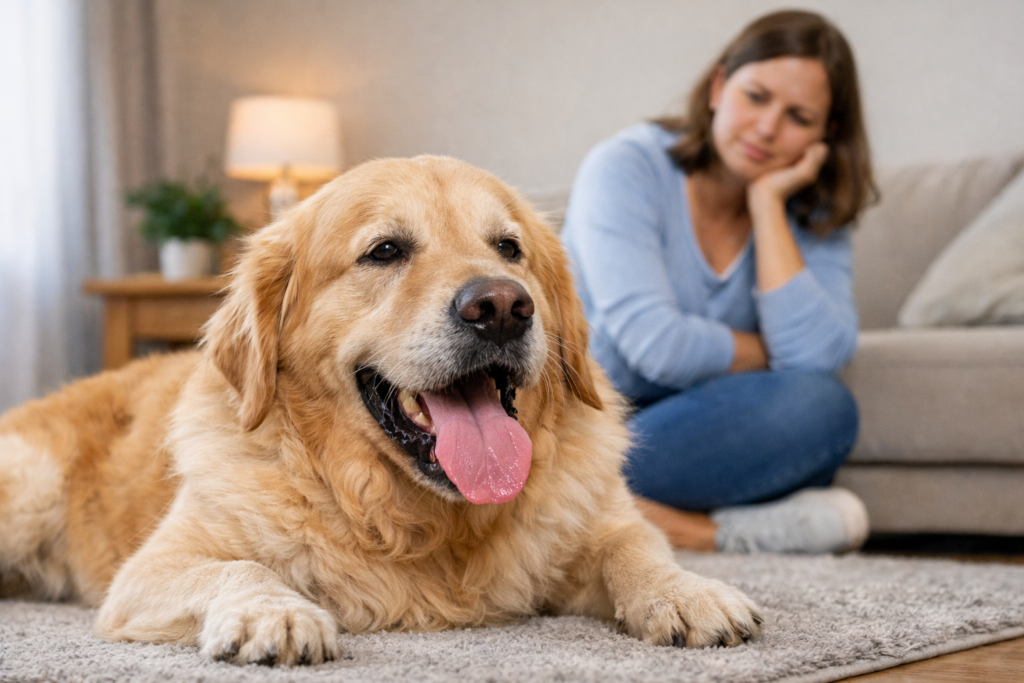
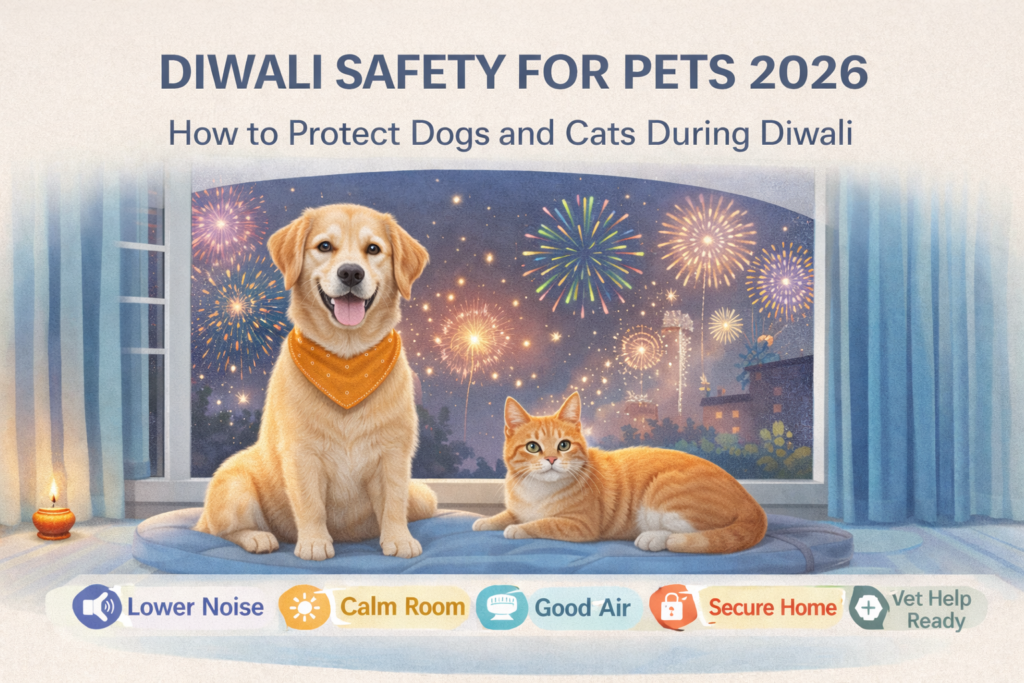
Diwali is one of the most joyful festivals, filled with lights, celebrations, and family gatherings. However, for pets—especially dogs and cats—Diwali can be a time of extreme fear and discomfort. Loud firecrackers, flashing lights, smoke, and crowded homes can cause serious stress, panic, and even health emergencies.
Diwali safety for pets 2026 is about understanding these risks early and taking simple, responsible steps to protect animals who depend entirely on us. This guide explains why Diwali is dangerous for pets, common risks, how to prepare your home, what to do during panic situations, and when veterinary help is necessary.
Overview Table — Diwali Safety for Pets 2026
| Risk Area | Why It Affects Pets | What Pet Owners Should Do |
|---|---|---|
| Firecracker Noise | Pets have highly sensitive hearing | Create a quiet safe room, close windows |
| Bright Flashes | Sudden lights trigger fear responses | Use curtains and soft indoor lighting |
| Smoke & Chemicals | Can irritate lungs and eyes | Keep pets indoors with good ventilation |
| Panic & Escape | Fear causes pets to run or hide | Secure doors, gates, and balconies |
| Routine Disruption | Sudden changes increase anxiety | Maintain feeding and rest schedules |
| Health Emergencies | Stress can worsen medical conditions | Keep vet contact details ready |
Table of Contents
Why Diwali Is Dangerous for Pets
Pets experience the world very differently from humans. Their hearing is far more sensitive, and they do not understand celebrations or sudden noises.
During Diwali, pets face:
- Sudden loud explosions
- Continuous unpredictable noise
- Bright flashes of light
- Smoke and chemical smells
- Changes in routine
- Overcrowded homes
For animals, these conditions signal danger, not celebration. Fear responses can escalate quickly if not handled calmly.
Common Diwali Risks for Dogs and Cats
Diwali poses both physical and emotional risks to pets.
Noise-related risks
- Panic attacks
- Trembling and hiding
- Attempting to escape homes
- Sudden aggression due to fear
Health risks
- Increased heart rate
- Breathing difficulty
- Digestive upset
- Dehydration
- Worsening of existing medical conditions
Environmental risks
- Smoke inhalation
- Burns from stray firecrackers
- Toxic residue from fireworks
- Injuries while running in panic
These risks affect indoor pets as much as outdoor pets.
Diwali Safety for Pets 2026: Quick Overview
- Firecracker noise is the biggest trigger
- Preparation must start before Diwali day
- Calm environments reduce panic
- Never leave pets unattended during peak noise
- Medical support should be ready in advance
Early planning prevents emergencies.
How Firecrackers Affect Pets
Firecrackers affect pets on multiple levels:
Hearing impact
Dogs and cats hear sounds at much higher frequencies. Firecrackers feel painfully loud, similar to explosions near the ears.
Psychological impact
Pets cannot predict when the next sound will occur. This unpredictability causes:
- Constant fear
- Loss of sense of safety
- Long-lasting anxiety
Physical reactions
- Shaking
- Excessive salivation
- Rapid breathing
- Loss of bladder control
Repeated exposure year after year can worsen reactions over time.
Safe Room Setup for Pets During Diwali
Creating a safe room is one of the most effective Diwali safety steps.
How to prepare a safe room
- Choose an interior room away from windows
- Close windows and curtains
- Use soft lighting
- Add familiar bedding, toys, and blankets
- Play low-volume calming music or white noise
Why it works
A safe room reduces sound intensity, blocks flashes of light, and gives pets a sense of control.
Never lock pets alone in unfamiliar spaces like bathrooms or balconies.
What To Do If Your Pet Panics
Despite preparation, some pets may still panic.
Immediate steps
- Stay calm yourself
- Speak softly and slowly
- Do not shout or punish
- Allow the pet to hide if they choose
- Sit nearby without forcing contact
Important
Do not try to restrain a panicking pet tightly. This can increase fear and lead to accidental bites or scratches.
Signs of Stress and Anxiety in Pets
Watch for:
- Trembling or shaking
- Hiding continuously
- Pacing or restlessness
- Excessive barking or meowing
- Drooling
- Refusal to eat or drink
- Trying to escape
These signs mean your pet needs immediate calming support.
Natural Ways to Calm Pets
Safe, non-medical calming methods include:
- Gentle petting if the pet allows it
- Familiar scents (their blanket or your clothing)
- Calm background sounds
- Maintaining routine feeding times
- Keeping lights steady
Avoid introducing anything new during Diwali.
Veterinary Tips for Diwali Pet Safety
Veterinarians strongly recommend preparation rather than reaction.
Before Diwali
- Ensure ID tags or microchips are updated
- Check vaccination status
- Refill essential medications
- Discuss anxiety history with your vet if applicable
During Diwali
- Keep pets indoors
- Walk dogs earlier in the day
- Secure doors and gates
After Diwali
- Observe pets for delayed stress reactions
- Resume routine slowly
Professional advice should always be followed if your pet has prior anxiety or health issues.
When to Call a Vet
Contact a veterinarian immediately if you notice:
- Continuous vomiting
- Collapse or fainting
- Severe breathing difficulty
- Injuries or burns
- Extreme aggression or confusion
- Symptoms lasting beyond 24 hours
Do not wait for symptoms to resolve on their own.
What Not To Do During Diwali With Pets
Certain actions increase danger instead of reducing it.
Avoid these mistakes
- Do not leave pets tied outside
- Do not take pets near firecrackers
- Do not force social interaction
- Do not give human calming medicines
- Do not punish fear behavior
- Do not ignore early signs of distress
Fear is not disobedience—it is a natural response.
Additional Safety Tips for Families and Neighbors
- Inform guests about pet sensitivity
- Ask visitors not to shout or tease pets
- Keep children educated about pet fear
- Dispose firecracker waste safely
- Encourage quieter celebrations when possible
Community awareness helps reduce harm.
Long-Term Impact of Diwali Stress on Pets
Repeated festival stress can lead to:
- Chronic anxiety
- Behavioral changes
- Noise phobia
- Reduced trust
- Health deterioration
Protecting pets during Diwali is not just about one day—it affects their long-term wellbeing.
Final Recommendation for Pet Owners
Diwali safety for pets 2026 depends on preparation, patience, and empathy. Pets do not understand festivals, but they understand safety and care. A calm home, familiar surroundings, and responsible human behavior can transform Diwali from a frightening event into a manageable experience for dogs and cats.
Diwali is a time of light and happiness, but for pets, it can feel overwhelming and frightening. By understanding risks, preparing safe spaces, responding calmly to panic, and seeking veterinary help when needed, families can protect their pets effectively.
True celebration includes compassion. Keeping pets safe during Diwali is a responsibility that reflects care, awareness, and humanity.
More Articles You May Like