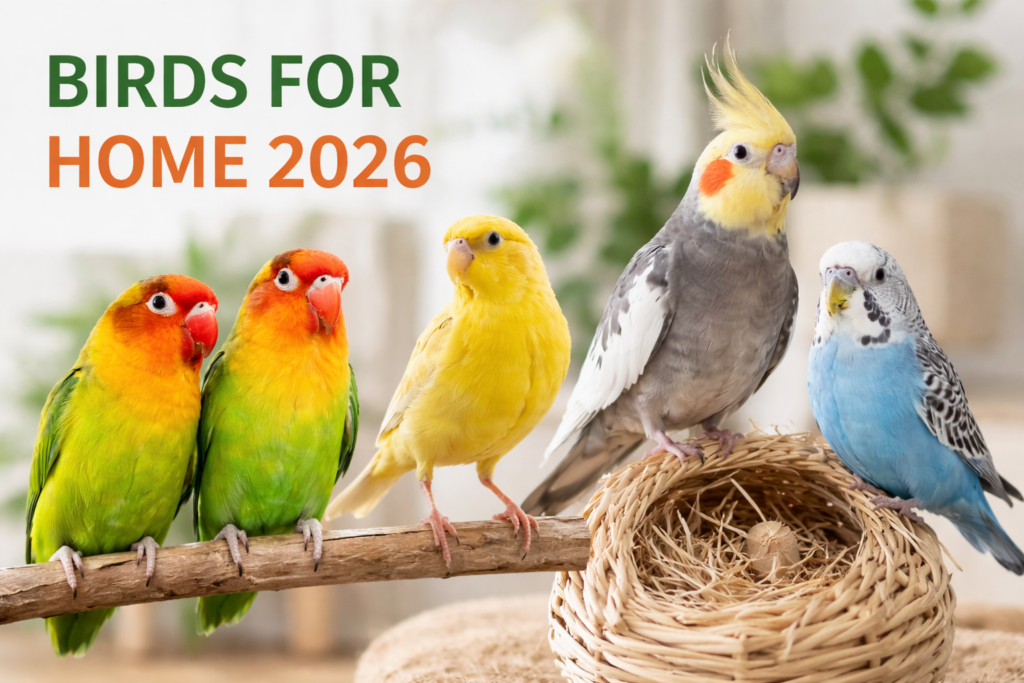
Keeping birds at home is a joyful experience for many families. Birds bring soft sounds, bright colors, and calm energy into living spaces. In 2026, more people are interested in birds for home because they fit well in both small and large houses.
This guide explains which birds are good for home, how to care for them, how to make a simple nest, and what to do if you find an injured bird.
Table of Contents
What Does It Mean to Keep Birds at Home?
Keeping birds at home means:
- Providing a safe place to live
- Giving proper food and clean water
- Keeping the environment clean
- Respecting their natural behavior
Birds are gentle creatures. They need patience, quiet care, and regular attention.
Quick Overview: Popular Birds for Home in 2026
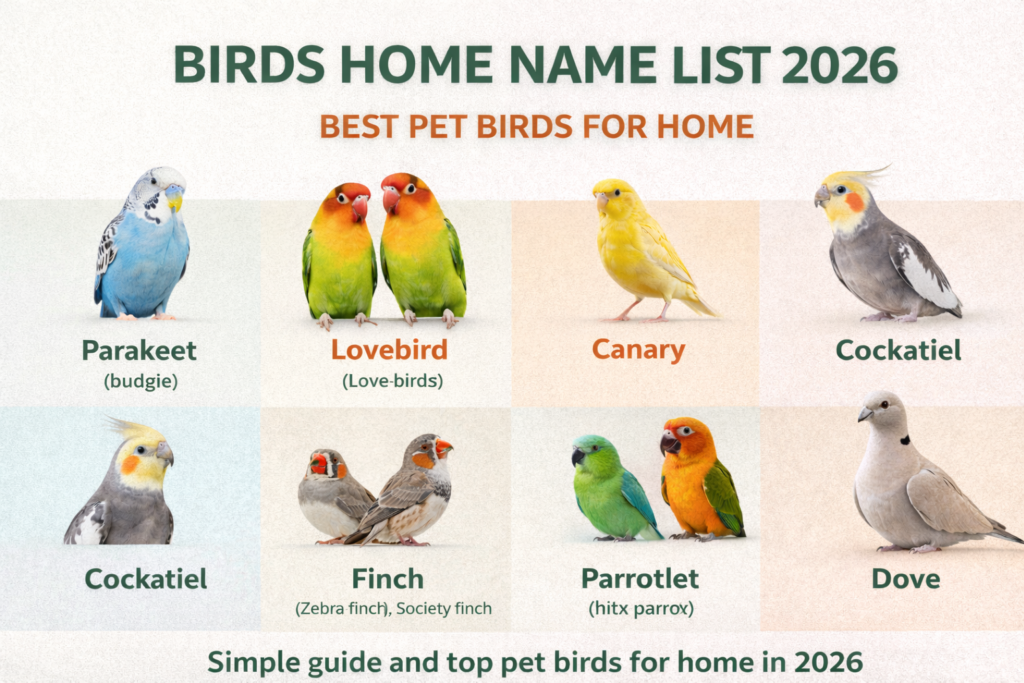
| Bird | Why It Is Good for Home | Best For |
|---|---|---|
| Parakeet (Budgie) | Friendly, easy to care | Beginners |
| Lovebird | Affectionate, colorful | Bonding pets |
| Canary | Beautiful singing | Calm homes |
| Cockatiel | Gentle and social | Families |
| Finch | Low maintenance | Quiet observation |
Which Bird Is Good for Home?
The best bird for home is one that:
- Adapts well to indoor life
- Is not aggressive
- Can live comfortably in a cage
- Does not need complex care
For most homes in 2026:
- Parakeets (budgies) are excellent for beginners
- Canaries are good for people who enjoy calm sounds
- Cockatiels suit families who want interaction
The right bird depends on your time, space, and noise tolerance.
Which Bird Is Good for Home in India?
In India, common choices for home birds include:
- Parakeets (budgies)
- Lovebirds
- Cockatiels
- Finches
These birds:
- Adjust well to Indian climate
- Are widely understood by bird keepers
- Have simple food needs
Always follow local rules and avoid keeping protected wild birds.

Is Love Birds Good for Home?
Yes, lovebirds are good for home when:
- They are kept in pairs or given daily attention
- They have enough space to move
- Owners interact gently and regularly
Lovebirds are:
- Colorful and active
- Known for strong bonding
- Social birds that enjoy company
However, they can be noisy and need time and patience.
How to Make a Nest for Birds at Home
A simple nest helps birds feel safe.
You can make a nest using:
- A small wooden or clay box
- Dry grass, coconut fiber, or soft straw
- Clean cloth pieces (no loose threads)
Steps:
- Choose a quiet corner
- Place the box securely
- Add soft natural material
- Keep it away from direct sunlight and wind
Do not disturb the nest once birds start using it.
Daily Care for Birds at Home
Birds need simple but regular care:
- Fresh water every day
- Clean food bowls
- Balanced diet (seeds, grains, fruits as suitable)
- Clean cage or area weekly
- Quiet time for rest
Talk softly to birds. Avoid loud noise and sudden movement.
How to Care for an Injured Bird at Home
If you find an injured bird:
- Stay calm
- Gently place it in a small box with air holes
- Keep the box warm and quiet
- Do not give food or water forcefully
- Avoid handling too much
- Contact a local animal rescuer or vet as soon as possible
Home care is only temporary support. Injured birds need professional help.
Choosing the Right Bird for Your Lifestyle
| Your Situation | Good Bird Choice | Why |
|---|---|---|
| First-time owner | Parakeet | Easy care |
| Small apartment | Canary, Finch | Quiet and calm |
| Want interaction | Cockatiel, Lovebird | Social nature |
| Busy schedule | Finch pair | Less handling needed |
| Family with kids | Cockatiel | Gentle behavior |
Making Your Home Safe for Birds
- Keep windows closed or screened
- Avoid smoke and strong smells
- Keep fans off when birds are out
- Remove sharp objects
- Keep away from cats and dogs
Safety is essential for birds to live peacefully at home.
Common Mistakes in Keeping Birds at Home
Avoid:
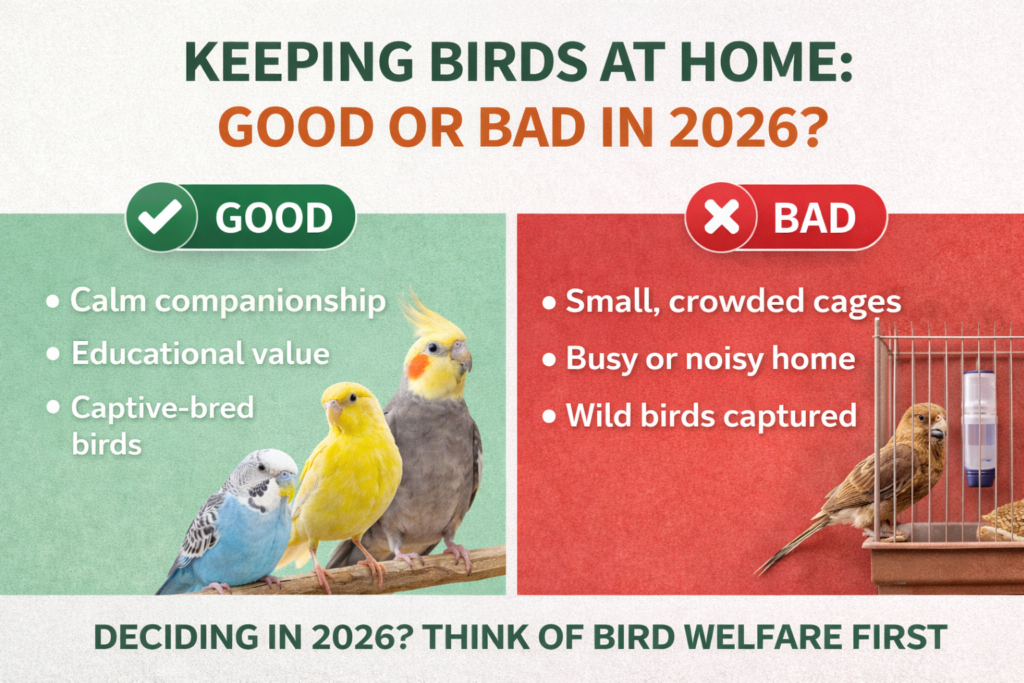
- Small crowded cages
- Dirty water bowls
- Feeding only one type of seed
- Loud music near birds
- Handling too much
These mistakes stress birds and affect health.
Emotional Care for Home Birds
Birds feel safe when:
- Owners speak gently
- Routine is followed
- Space is respected
- Interaction is kind and patient
A calm home makes birds happier.
FAQ
Q1. Which bird is good for home in 2026?
Parakeets (budgies), cockatiels, canaries, finches, and lovebirds are popular home birds because they adapt well to indoor care when their needs are met.
Q2. Is love birds good for home?
Yes. Lovebirds can be good for home if they have enough space, daily attention, and a calm environment. They are social and may be noisy.
Q3. How to make nest for birds at home?
Use a safe nest box and soft natural materials like dry grass or coconut fiber. Keep the nest in a quiet, stable corner away from heat and wind.
Q4. How to care for an injured bird at home?
Place the bird in a ventilated box, keep it warm and quiet, avoid force-feeding, and contact a local rescuer or veterinarian as soon as possible.
Birds for home in 2026 are chosen not for beauty alone, but for how well they fit your life. The right bird brings joy, calm sound, and gentle companionship into your home.
If you understand their needs, give safe space, and care daily, birds can live happily and peacefully with you.
That is what makes birds a wonderful choice for home.