
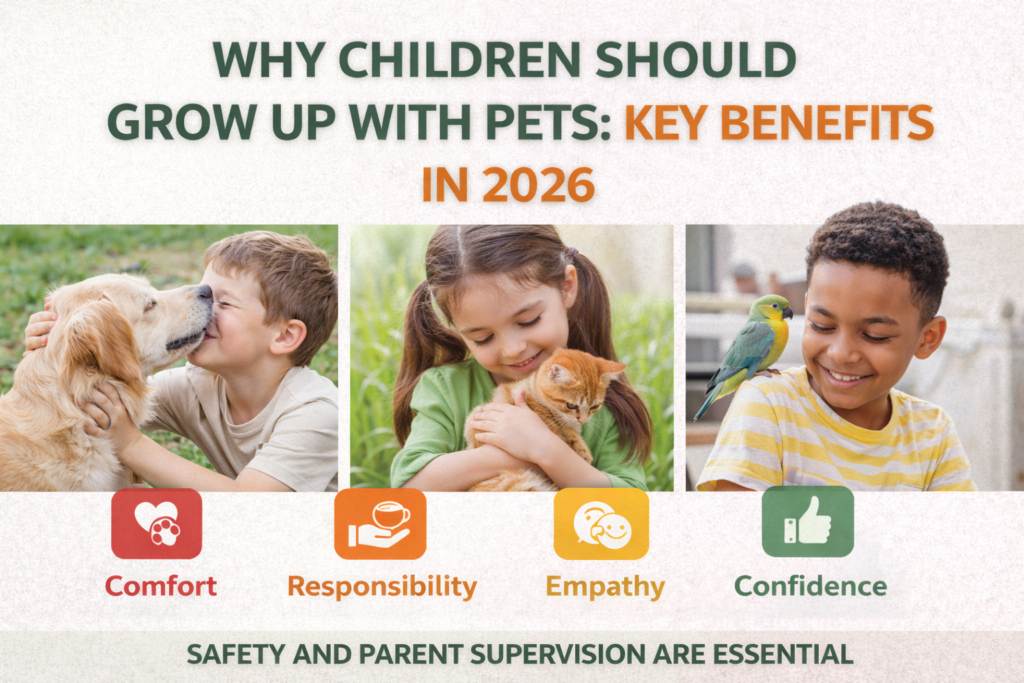
In many families, pets are more than animals. They become friends, playmates, and part of daily life. In 2026, more parents are asking:
This guide explains how pets can support a child’s emotional, social, and daily development, and what parents should keep in mind for safe and happy homes.
Table of Contents
What Does Growing Up with Pets Mean?
Growing up with pets means children:
- Share their home with animals like dogs, cats, birds, or rabbits
- Take part in simple daily care
- Learn to live with another living being
It is not about owning a pet. It is about building a relationship with care and responsibility.
Quick Overview: Benefits of Pets for Children
| Area | How Pets Help | Why It Matters |
|---|---|---|
| Emotional | Comfort and friendship | Builds confidence |
| Social | Teaches kindness | Improves relationships |
| Daily habits | Simple routines | Builds responsibility |
| Activity | Play and movement | Supports physical health |
| Learning | Understanding life | Builds empathy |
Emotional Support for Children
Pets provide:
- A listening presence
- Comfort during sadness
- A feeling of being needed
Children often talk to pets when they feel shy or upset. This helps them express feelings safely.
Pets Teach Responsibility from a Young Age
Simple tasks like:
- Filling water bowls
- Helping with feeding
- Cleaning small areas
Teach children that:
- Actions matter
- Living beings depend on care
- Routines are important
This builds responsibility naturally.

Pets Help Children Develop Empathy
By seeing pets feel hunger, fear, or joy, children learn:
- To notice others’ feelings
- To act gently
- To respect life
Empathy learned at home often reflects in how children treat people.
Physical Activity Through Play
Pets encourage:
- Outdoor play
- Walking and running
- Less screen time
Active play helps children:
- Stay fit
- Sleep better
- Build healthy habits
Even small pets inspire movement and curiosity.
Social Skills and Confidence
Children with pets often:
- Talk more openly
- Feel less lonely
- Gain confidence in caring roles
Pets give unconditional companionship, which builds self-esteem.
Learning About Life and Nature
Through pets, children learn:
- Animals have needs
- Life grows and changes
- Care continues over time
This helps children understand responsibility and patience.
Key Benefits of Growing Up with Pets
| Benefit | What Children Learn | Long-Term Value |
|---|---|---|
| Care | Daily attention | Responsible habits |
| Kindness | Gentle behavior | Empathy |
| Routine | Regular tasks | Discipline |
| Joy | Play and fun | Positive mindset |
| Support | Comfort presence | Emotional strength |
Safety First: What Parents Must Ensure
Pets are helpful only when safety is maintained.
Parents should:
- Supervise young children
- Teach gentle handling
- Keep pets healthy and clean
- Avoid rough play
- Choose pets suitable for children
Safety builds trust for both child and pet.
Choosing the Right Pet for Children
Good family pets usually:
- Are gentle in nature
- Adapt well to home life
- Are easy to manage
Examples:
- Dogs for active families
- Cats for calm homes
- Birds or rabbits for gentle care
The right pet depends on family lifestyle.
When Growing Up with Pets May Not Be Ideal
Pets may not be suitable if:
- Family has severe allergies
- Home is too crowded
- No one has time for daily care
- Children are afraid of animals
In such cases, it is better to wait.
Teaching Respect for Pets
Children should learn:
- Pets are not toys
- Pets need rest
- Loud noise can scare them
- Kind touch matters
This creates healthy relationships.
Long-Term Impact on Children
Children who grow up with pets often develop:
- Strong emotional skills
- Better understanding of care
- Respect for nature
- Balanced routines
These lessons stay into adulthood.
FAQ
Q1. Why is it good for children to grow up with pets?
Pets help children learn responsibility, empathy, and gentle behavior while providing companionship and emotional comfort.
Q2. Are pets safe for small children?
Pets can be safe when parents supervise interactions, teach gentle handling, and keep pets healthy and well cared for.
Q3. Which pets are best for families with children?
Many families choose gentle pets such as calm dogs, friendly cats, or easy-care birds and rabbits, depending on lifestyle and time.
Q4. What should parents teach children about pets?
Parents should teach that pets are living beings, not toys, and that pets need kindness, rest, safe handling, and daily care.
Final Words: Why Children Should Grow Up with Pets in 2026
So, why should children grow up with pets in 2026?
Because pets help children learn kindness, responsibility, emotional balance, and joy in everyday life.
When families choose the right pet and care for it responsibly, growing up with pets can be a meaningful part of childhood.
More Articles You May Like




Global Animal Health, Pet Care & Veterinary Research Insights Accurate, science-based articles on animal health, pet wellbeing, research updates, safety tips and veterinary-approved guidance — written with expert review.
✅ Verified veterinary sources & scientific references
✅ Updated according to current veterinary guidelines
✅ Research-backed animal welfare and pet care content
✅ Strict zero-misinformation and accuracy policy
📩 Contact: admin@tanuvas.org
👍 Facebook 🐦 X (Twitter) 💬 WhatsApp Channel
🏥 This article is written and verified by the Veterinary Health Editorial Team
All animal-health information provided here follows established veterinary standards, updated clinical guidance, and internationally recognized animal-welfare practices to ensure accuracy, safety and reliability.