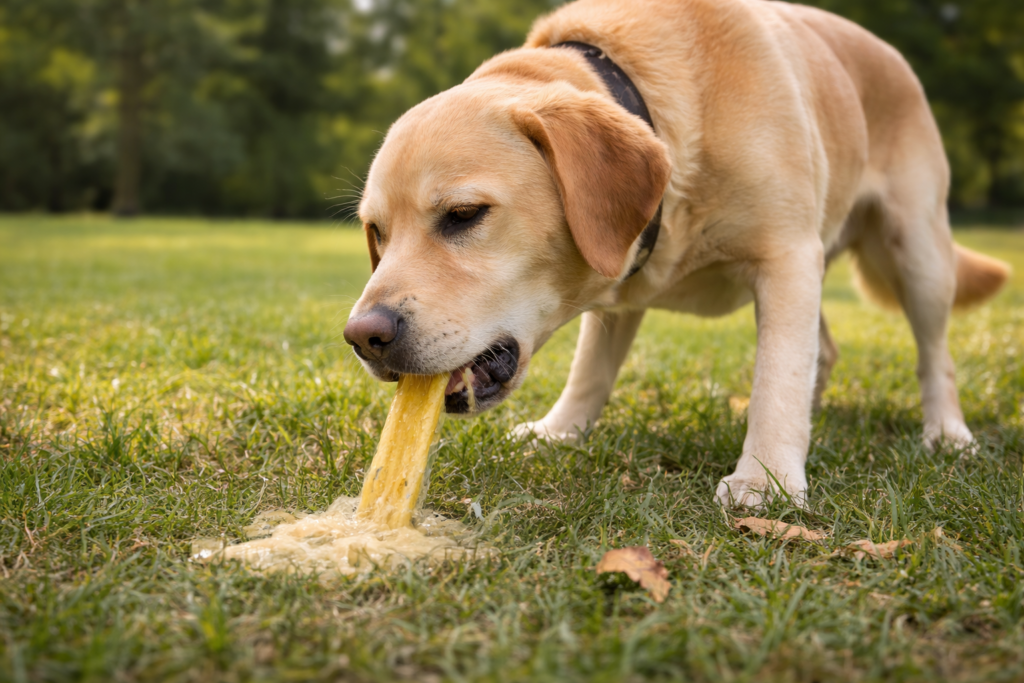
Seeing your dog vomit can be alarming. Many owners ask why is my dog throwing up because vomiting can range from harmless to serious depending on the cause, frequency, and appearance. In 2026, veterinarians emphasize that context matters more than the vomit itself.
This guide explains the most common reasons dogs throw up, how to identify different vomit types, when vomiting is normal, and when it’s a sign you should contact a veterinarian immediately.
Quick Overview
| Situation | Likely Cause | What to Do |
|---|---|---|
| Vomits once, acts normal | Mild upset | Monitor |
| Vomits yellow foam | Empty stomach / bile | Adjust feeding |
| Vomits repeatedly | Infection, toxin, blockage | Vet visit |
| Vomits + lethargy | Illness or pain | Urgent care |
| Blood in vomit | Serious condition | Emergency |
Is It Normal for Dogs to Throw Up?
Occasional vomiting can be normal, especially if:
- It happens once
- Your dog acts normal afterward
- Appetite and energy return quickly
However, repeated or severe vomiting is never normal and should be investigated.
Common Reasons Why Dogs Throw Up
1. Eating Too Fast or Too Much
Dogs may vomit shortly after eating due to:
- Overeating
- Eating too quickly
- Swallowing excess air
Meaning: Mechanical stomach overload
Action: Smaller meals, slow-feed bowls
2. Empty Stomach (Yellow Foam Vomit)
Many owners report yellow or foamy vomit, especially in the morning.
This usually indicates:
- Bile irritation
- Long gaps between meals
Meaning: Stomach acid buildup
Action: Feed smaller, more frequent meals
3. Dietary Indiscretion (Eating the Wrong Thing)
Dogs often eat:
- Grass
- Garbage
- Human food
- Foreign objects
Meaning: Stomach irritation or mild poisoning
Action: Monitor closely; vet if vomiting continues
4. Food Sensitivity or Allergy
Signs include:
- Repeated vomiting
- Diarrhea
- Itchy skin
- Ear infections
Meaning: Food intolerance
Action: Vet-guided diet trial
5. Infection (Viral or Bacterial)
Vomiting with:
- Diarrhea
- Fever
- Lethargy
may indicate infection.
Meaning: Gastrointestinal illness
Action: Veterinary evaluation
6. Parasites
Intestinal parasites can cause:
- Vomiting
- Weight loss
- Poor coat
- Diarrhea
Meaning: Internal infestation
Action: Fecal test and treatment
7. Toxins or Poisoning
Emergency causes include:
- Chocolate
- Certain plants
- Human medications
- Chemicals
Meaning: Medical emergency
Action: Immediate vet care
8. Foreign Body or Blockage
Repeated vomiting, especially without food retention, may indicate:
- Toy
- Bone
- Cloth
- Plastic
Meaning: Intestinal obstruction
Action: Emergency vet visit
9. Chronic Illness
Ongoing vomiting may be linked to:
- Kidney disease
- Liver disease
- Pancreatitis
- Hormonal disorders
Meaning: Underlying medical condition
Action: Diagnostic testing
Types of Dog Vomit and What They Mean
| Vomit Appearance | Possible Meaning |
|---|---|
| Clear / foamy | Empty stomach, mild irritation |
| Yellow | Bile |
| Undigested food | Eating too fast |
| White foam | Acid reflux |
| Blood (red or dark) | Serious condition |
| Coffee-ground look | Internal bleeding |
How Often Is Too Often?
- Once: Usually not serious
- Twice in 24 hours: Monitor closely
- More than 2–3 times: Vet visit
- Persistent for 24 hours: Urgent care
- Puppies or seniors: Always take seriously
When Vomiting Is an Emergency
Seek immediate veterinary care if vomiting is accompanied by:
- Blood
- Severe lethargy
- Abdominal pain
- Bloated stomach
- Collapse
- Seizures
- Inability to keep water down
What You Can Do at Home (Only for Mild Cases)
If your dog vomits once and seems normal:
- Withhold food for 8–12 hours (not puppies)
- Offer small amounts of water
- Resume bland diet gradually
- Observe behavior closely
⚠️ Never give human medications without vet approval.
Decision Guide
| Scenario | Monitor | Vet Visit | Emergency |
|---|---|---|---|
| Single vomit, normal behavior | ✔ | — | — |
| Repeated vomiting | — | ✔ | — |
| Vomiting + blood | — | — | ✔ |
| Vomiting + lethargy | — | ✔ | ✔ |
| Puppy vomiting | — | ✔ | — |
People Also Ask
Why is my dog throwing up but acting normal?
A single episode may be due to eating too fast, mild irritation, or an empty stomach. Monitor closely.
Why is my dog throwing up yellow foam?
This usually indicates bile irritation from an empty stomach, especially in the morning.
When should I worry about my dog throwing up?
If vomiting is frequent, severe, contains blood, or is paired with lethargy, pain, or appetite loss.
Can grass cause my dog to throw up?
Yes, grass can irritate the stomach, but vomiting may already be developing before grass eating.
Should I give my dog medicine for vomiting?
Only with veterinary guidance. Many human medications are unsafe for dogs.
Practical Recommendation (Vet-Aligned)
In 2026, veterinarians agree:
- Occasional vomiting is common
- Repeated vomiting is not normal
- Patterns matter more than single events
Observation is appropriate only when your dog remains bright, active, and hydrated.
So, why is my dog throwing up?
Most cases are linked to diet, mild stomach upset, or eating habits. However, frequent vomiting, blood, or behavior changes should never be ignored.
Trust patterns, not panic—and when in doubt, choose veterinary care.
More Articles You May Like