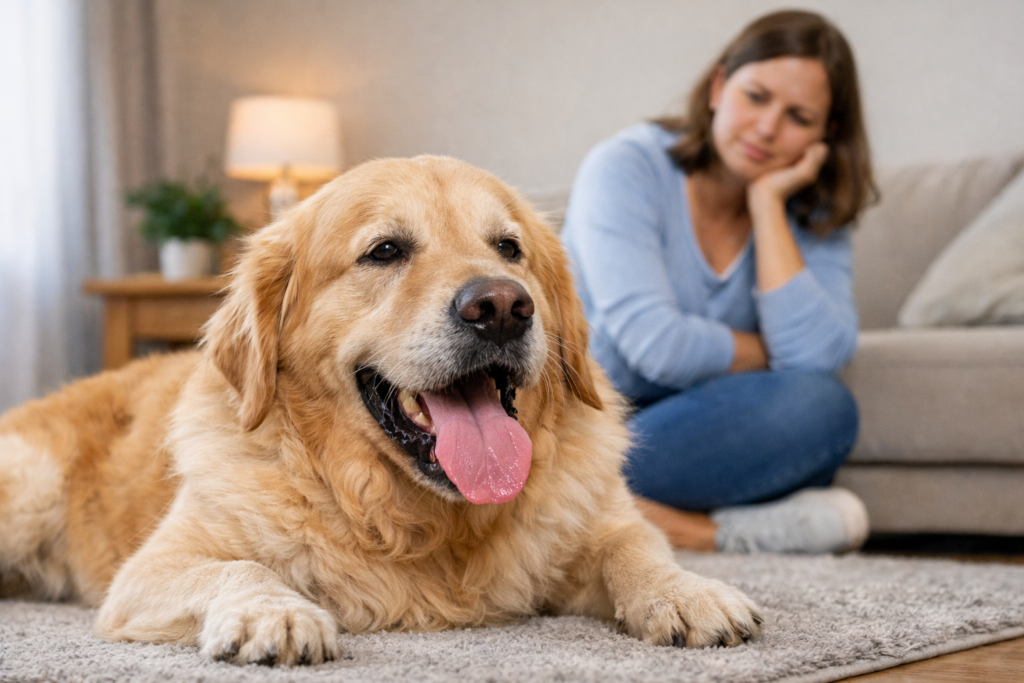
Many dog owners ask why is my dog panting so much because panting can look uncomfortable or alarming—especially when it happens indoors, at night, or without exercise. In 2026, veterinarians agree that panting is normal in many situations, but excessive or unusual panting can also be a sign that something is wrong.
This guide explains all common reasons dogs pant, how to tell normal panting from dangerous panting, and when you should contact a veterinarian.
Quick Overview
| Situation | Likely Cause | Action |
|---|---|---|
| After exercise or play | Normal cooling | No concern |
| Hot weather | Temperature regulation | Provide water, shade |
| Excitement or stress | Emotional response | Calm environment |
| Panting at rest | Pain, anxiety, illness | Monitor closely |
| Heavy panting + other symptoms | Medical issue | Vet visit |
What Is Panting in Dogs?
Dogs do not sweat like humans.
Panting is how dogs:
- Cool their body
- Regulate temperature
- Release heat and moisture
Light panting after activity or in warm weather is completely normal.
Normal Reasons Why Dogs Pant
1. Heat and Temperature Control
The most common reason.
Dogs pant when:
- The weather is hot
- They’ve been in the sun
- Indoor airflow is poor
What to do:
Provide fresh water, shade, fans, or a cooler space.
2. Exercise or Physical Activity
Panting after:
- Walking
- Running
- Playing
is normal and helps the dog recover.
Panting should slow down within 10–20 minutes after rest.
3. Excitement or Happiness
Dogs may pant when:
- Greeting their owner
- Anticipating food
- Going for a walk
This panting is usually light and short-lived.
4. Stress, Fear, or Anxiety
Panting can be an emotional response.
Common triggers:
- Loud noises (thunder, fireworks)
- Car rides
- New environments
- Separation anxiety
Panting from stress is often paired with:
- Pacing
- Whining
- Trembling
Concerning Reasons Why Dogs Pant Excessively
5. Pain or Discomfort
Dogs often hide pain.
Panting may indicate:
- Injury
- Arthritis
- Abdominal pain
- Internal discomfort
If panting happens without heat or activity, pain should be considered.
6. Overheating or Heatstroke (Emergency)
Danger signs include:
- Heavy, rapid panting
- Drooling
- Red gums
- Weakness or collapse
Action:
This is an emergency. Cool the dog gradually and seek veterinary care immediately.
7. Illness or Fever
Panting may occur with:
- Infections
- Fever
- Respiratory problems
If panting is constant and your dog seems unwell, a vet check is needed.
8. Heart or Lung Problems
Conditions such as:
- Heart disease
- Lung disease
can cause panting even at rest, often paired with coughing or fatigue.
9. Medication Side Effects
Some medications (including steroids) can cause:
- Increased panting
- Restlessness
Always discuss new symptoms after starting medication.
Why Is My Dog Panting at Night?
Night-time panting may be due to:
- Anxiety
- Pain that worsens at rest
- Overheating indoors
- Age-related discomfort
Panting that disrupts sleep should not be ignored.
Why Is My Dog Panting While Resting?
Panting at rest is not normal unless:
- The environment is hot
- The dog is stressed
If the room is cool and your dog is calm, resting panting suggests a health issue.
When Panting Is an Emergency
Seek immediate veterinary care if panting is accompanied by:
- Collapse
- Blue or pale gums
- Vomiting
- Severe lethargy
- Uncontrolled drooling
- Disorientation
What You Can Do at Home
For mild, non-emergency panting:
- Move your dog to a cool area
- Offer fresh water
- Reduce stimulation
- Observe breathing rate
- Note when panting occurs
Never give human medications.
Decision Guide
| Scenario | Normal | Vet Visit |
|---|---|---|
| Panting after exercise | ✔ | — |
| Panting in heat | ✔ | — |
| Panting at rest | — | ✔ |
| Panting with pain signs | — | ✔ |
| Heavy panting + collapse | — | Emergency |
People Also Ask (FAQ)
Why is my dog panting so much all of a sudden?
Sudden panting can be caused by stress, pain, illness, or overheating. Observe closely and contact a vet if it persists.
Is panting a sign of pain in dogs?
Yes. Dogs may pant as a response to pain, especially when resting.
Do older dogs pant more?
Senior dogs may pant more due to arthritis, heart issues, or reduced temperature regulation.
Can anxiety cause panting?
Yes. Anxiety-related panting is common and often paired with pacing or trembling.
Practical Recommendation
In 2026, veterinarians emphasize this rule:
- Context matters more than the panting itself
Occasional panting is normal. Persistent, heavy, or unexplained panting deserves attention.
Trust patterns, not assumptions.
So, why is my dog panting so much?
Most often, it’s a normal response to heat, exercise, or emotion. But panting that happens at rest, at night, or with other symptoms can signal pain, illness, or overheating.
When in doubt, it’s always safer to check with a veterinarian.
More Articles You May Like