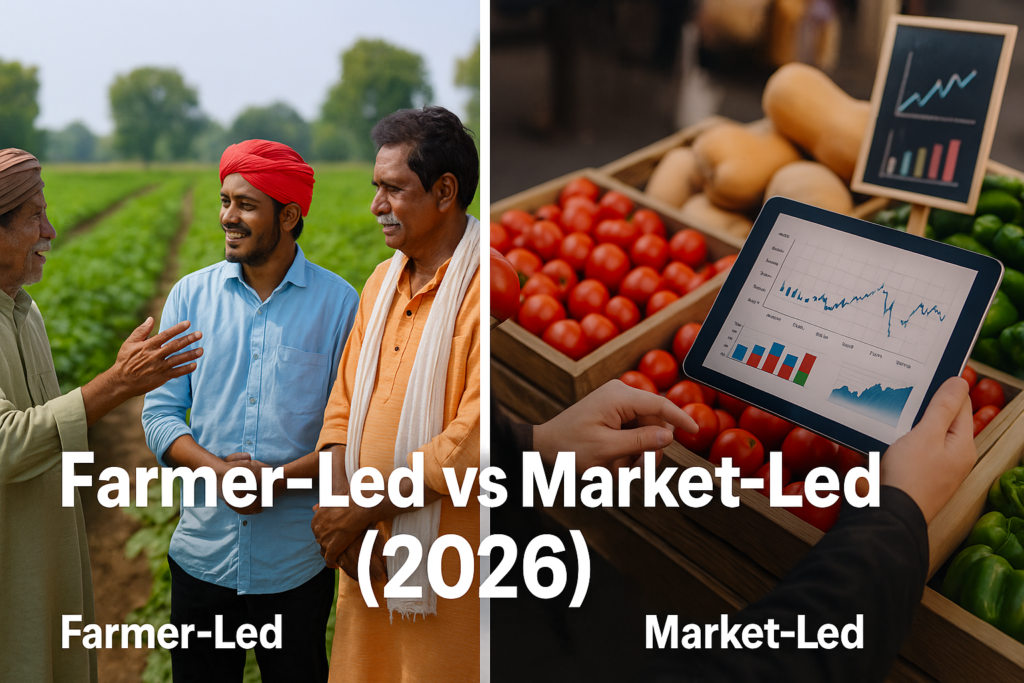
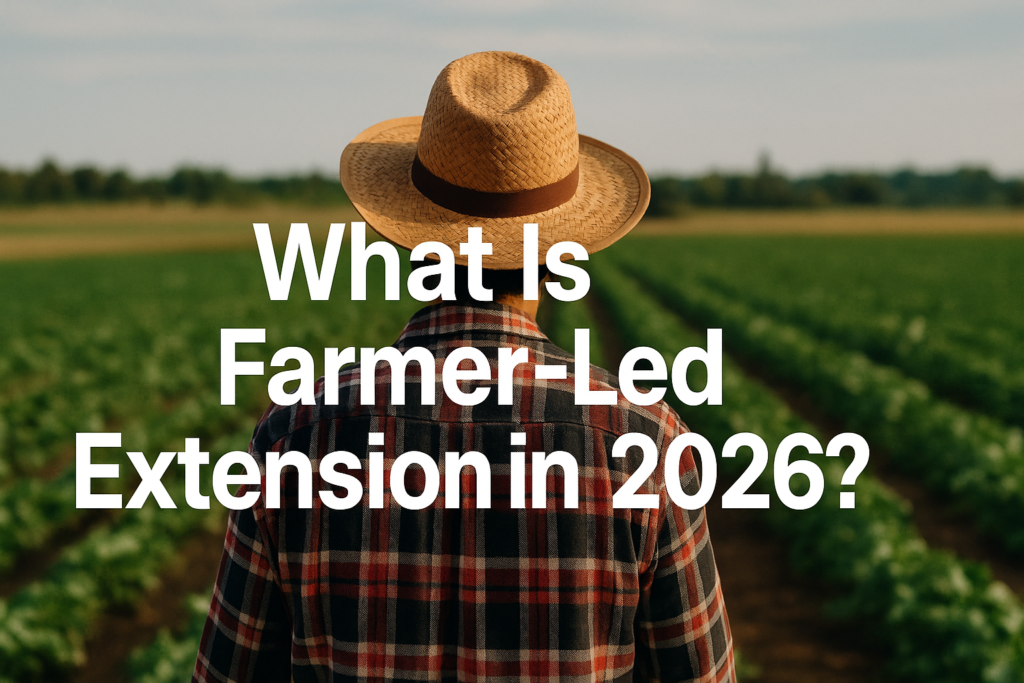
Farmer-led extension in 2026 is an agricultural model where farmers guide other farmers through practical demonstrations, field experience, and community learning.
Instead of relying only on government officers or external experts, the system places trained farmers at the centre of decision-making, training, and knowledge transfer.
This approach has become more important in 2026 because farming requires quick solutions, climate-related decisions, and trust-based learning.
Quick Table — Farmer-Led Extension 2026 (Light Discover Style)
| Aspect | 2026 Update |
|---|---|
| Leadership | Lead farmers guide others with field-tested practices |
| Learning Model | Farmer-to-farmer training with practical demonstrations |
| Technology | Use of WhatsApp groups, apps, drone videos, and local alerts |
| Knowledge Type | Local solutions suited to weather, soil, and regional crops |
| Community Role | Collective decisions and shared responsibility |
Why It Is Called “Farmer-Led”
The approach is called farmer-led because farmers themselves plan, teach, demonstrate, and guide.
Institutions such as agricultural universities, extension centres, and research bodies act as support systems, not as primary decision makers.
How the Farmer-Led Model Works in 2026
1. Selection of Lead Farmers
Farmers with strong field knowledge, good results, and leadership qualities are identified.
2. Capacity Building
Lead farmers receive training from experts on modern techniques, climate-smart farming, pest alerts, nutrition management, and soil practices.
3. Field Demonstrations
They conduct demonstrations in their own fields, allowing neighbours to see the results directly.
4. Farmer-to-Farmer Learning
Others adopt the practices after observing yield improvements and practical benefits.
5. Local Problem Solving
Solutions are designed for local issues such as water scarcity, pest outbreaks, and changing rainfall.
6. Digital Support (2026 Trend)
Communication has become faster through:
• WhatsApp advisory groups
• drone-based pest scouting videos
• mobile crop advisory tools
• AI alerts for disease symptoms
Why Farmer-Led Extension Became Important in 2026
• Farmers trust real field results more than classroom sessions
• Decisions must be fast due to climate stress
• Local solutions often work better than general guidelines
• The model reduces the gap between research and real fields
• Women and youth have begun taking leadership roles
Key Features of the 2026 Model
• Peer learning
• Community cooperation
• Practical on-field sessions
• Local wisdom with scientific updates
• Low communication cost
• Real-time advice during emergencies
• Inclusive participation of women, youth, and small farmers
Advantages
High Trust
Farmers accept advice more easily when it comes from someone with similar conditions and similar challenges.
Low Cost
Village-based learning does not require large meetings or travel.
Faster Adoption
Live demonstrations in nearby fields encourage quicker adoption of improved practices.
Locally Suitable Solutions
Recommendations match the village’s soil, climate, and cropping pattern.
Community Strengthening
Farmers collectively work on water management, pest control, and input sharing.
Challenges
Need for Continuous Training
Lead farmers must stay updated with the latest research.
Risk of Misguided Advice
Local solutions require proper verification before scaling.
Participation Issues
The model works best only when farmers cooperate consistently.
Examples of Farmer-Led Activities in 2026
• Demonstrations of drought-tolerant varieties
• Nutrient management guidance based on soil tests
• On-farm compost preparation training
• Use of drones for early pest identification
• Women-led nutrition garden programs
• Organic inputs prepared using local materials
• Small climate advisory groups run by lead farmers