Many people in 2026 ask a simple but important question:
Is keeping birds at home good or bad?
Birds are beautiful, gentle, and calming. At the same time, they are living beings with specific needs. Keeping birds at home can be good in some situations and not suitable in others.
This article explains both sides clearly, so readers can decide responsibly.
Table of Contents
What Does “Keeping Birds at Home” Mean?
Keeping birds at home usually means:
- Housing birds indoors in cages or safe areas
- Providing daily food, water, and cleaning
- Allowing limited interaction with humans
It is different from:
- Observing wild birds outdoors
- Temporary rescue of injured birds
The impact depends on how birds are kept, not just the idea of keeping them.
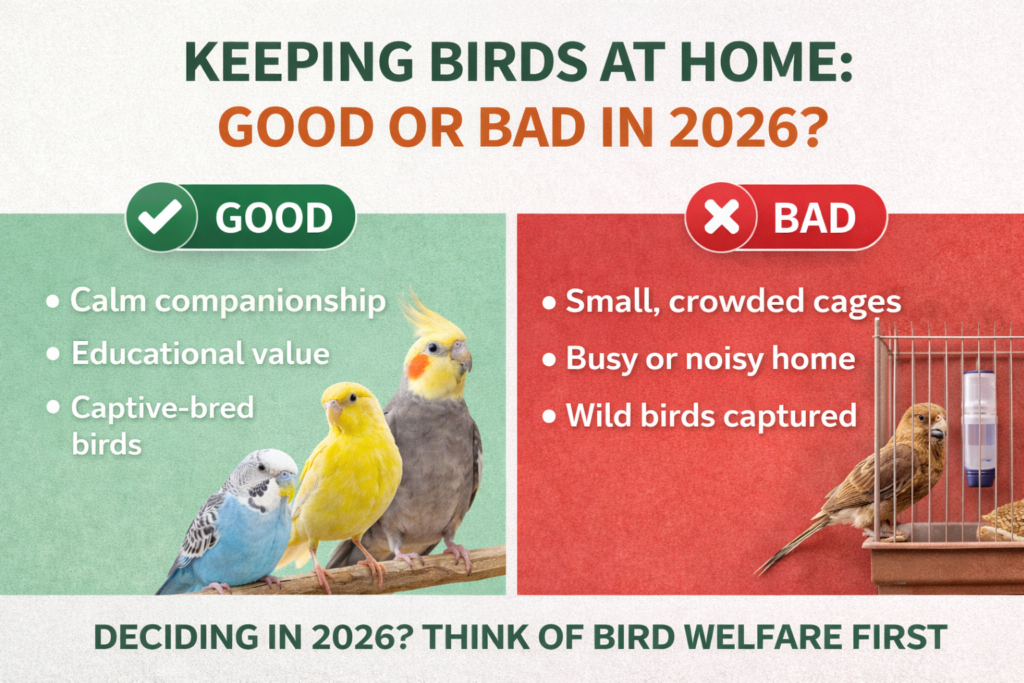
Quick Overview: Is Keeping Birds at Home Good or Bad?
| Aspect | When It Is Good | When It Is Bad |
|---|---|---|
| Bird welfare | Proper space and care | Small cages, neglect |
| Human benefit | Calm companionship | Stress or lack of time |
| Environment | Captive-bred birds | Wild birds captured |
| Daily care | Regular routine | Irregular or careless care |
When Keeping Birds at Home Can Be Good
Keeping birds at home can be positive when done responsibly.
1. Birds Provide Calm Companionship
Birds bring:
- Gentle sounds
- Visual beauty
- A peaceful presence
For calm homes, birds can be emotionally comforting.
2. Birds Help Create a Peaceful Environment
Watching birds eat, rest, or sing can reduce stress. Many people find birds soothing without needing constant interaction.
3. Suitable for Small Living Spaces
Compared to larger pets, birds:
- Need less floor space
- Fit well in apartments
- Can be cared for indoors
This makes them suitable for some urban homes.
4. Educational Value for Families
When cared for properly, birds teach:
- Responsibility
- Gentleness
- Respect for living beings
Children can learn empathy through supervised care.
5. Good for People Who Prefer Quiet Pets
Birds suit people who:
- Do not want high physical activity
- Prefer observation over handling
- Enjoy routine care
When Keeping Birds at Home Can Be Bad
Keeping birds at home can be harmful if their needs are not met.
1. Lack of Proper Space
Birds need:
- Space to move
- Opportunities to stretch wings
Small, crowded cages can cause:
- Stress
- Feather damage
- Behavioral problems
2. Emotional Stress for Birds
Birds are sensitive. Loud noise, constant handling, or isolation can make them anxious.
Signs of stress include:
- Feather plucking
- Aggressive behavior
- Silence or fear
3. Capturing Wild Birds Is Harmful
Keeping wild-caught birds is harmful and often illegal.
Wild birds:
- Suffer in captivity
- Lose survival skills
- Face high stress and illness
Only captive-bred birds should ever be kept at home.
4. Neglect Due to Busy Lifestyle
Birds need:
- Daily cleaning
- Fresh food and water
- Consistent routine
Busy schedules can lead to neglect, even unintentionally.
5. Misunderstanding Bird Needs
Some people think birds are “easy pets.”
In reality, birds need:
- Mental stimulation
- Clean environments
- Long-term commitment
Ignoring this can make keeping birds a bad choice.
Good vs Bad: Decision Guide for Keeping Birds at Home
| Your Situation | Keeping Birds Is | Reason |
|---|---|---|
| Time for daily care | Good | Birds get routine and attention |
| Very busy schedule | Not ideal | Risk of neglect |
| Quiet home environment | Good | Birds feel calm |
| Loud, crowded home | Bad | Bird stress increases |
| Using captive-bred birds | Good | Ethical and safe |
| Keeping wild birds | Bad | Unethical and harmful |
Are Birds Happy in Home Environments?
Bird happiness depends on:
- Space
- Care quality
- Mental stimulation
- Gentle human interaction
Birds can live well at home only when their natural needs are respected.
Ethical Considerations in 2026
In 2026, awareness about animal welfare is higher.
Responsible bird keeping means:
- Choosing ethical sources
- Avoiding impulse buying
- Providing long-term care
Birds should never be treated as decoration.
Alternatives to Keeping Birds at Home
If full-time care is not possible, consider:
- Bird-friendly balconies or gardens
- Bird feeders for wild birds (without trapping)
- Supporting bird conservation efforts
These options allow enjoyment without captivity.
FAQ
Q1. Is keeping birds at home good or bad in 2026?
It can be good if birds are given proper space, daily care, and ethical treatment. It can be bad if birds are kept in small cages, neglected, or taken from the wild.
Q2. Are birds happy living in homes?
Birds can live well at home when their natural needs for space, calm environment, mental stimulation, and routine care are respected.
Q3. Is it wrong to keep wild birds at home?
Yes. Keeping wild birds is harmful and often illegal. Only captive-bred birds should ever be kept as pets.
Final Verdict: Is Keeping Birds at Home Good or Bad in 2026?
Keeping birds at home is neither fully good nor fully bad.
It is:
- Good when done with care, ethics, and understanding
- Bad when done without time, space, or responsibility
The decision should always prioritize bird welfare over human desire.
If you can provide:
- Proper space
- Daily care
- Calm environment
- Ethical choices
Then keeping birds at home can be a positive experience.