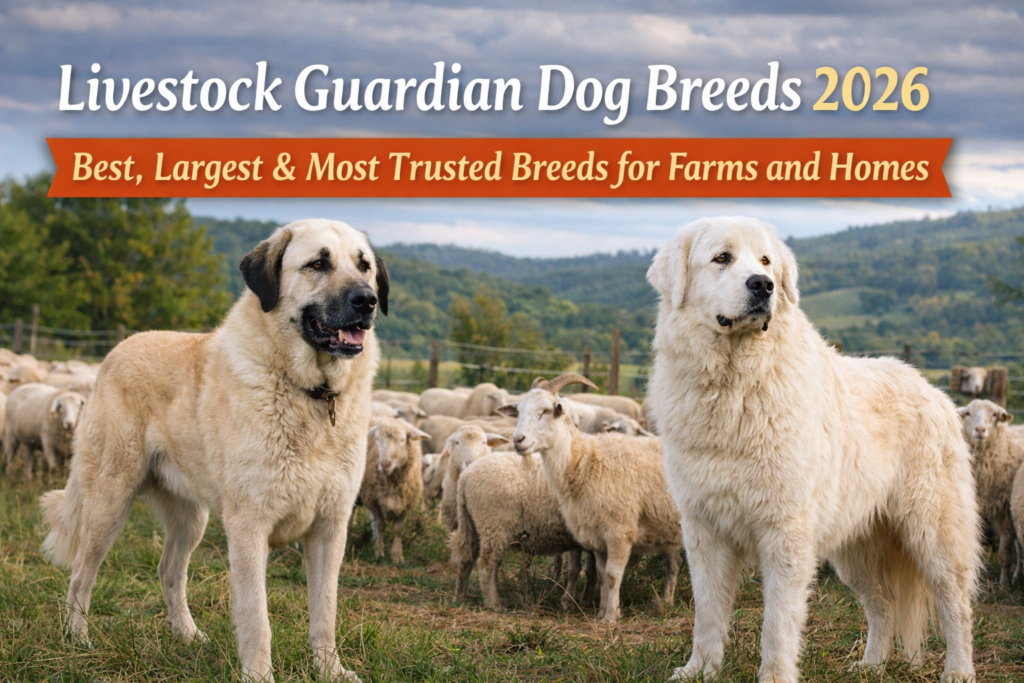
In 2026, interest in livestock guardian dog breeds continues to grow as farmers and rural families look for natural, reliable ways to protect animals from predators. These dogs are not herders or pets in the usual sense. They live with livestock, bond with them, and defend them as their own family. This guide explains what makes these dogs special, which breeds stand out, and how to choose the right one for your needs.
Table of Contents
Quick Overview: Livestock Guardian Dogs at a Glance
| Aspect | Details |
|---|---|
| Main Role | Protect livestock from predators |
| Temperament | Calm, alert, loyal, independent |
| Work Style | Stays with animals, not chasing predators |
| Typical Size | Large to giant breeds |
| Best For | Sheep, goats, cattle, poultry, rural farms |
| Training Focus | Bonding with livestock, not obedience tricks |
What Are Livestock Guardian Dogs?
Livestock guardian dogs are breeds developed over centuries to live among farm animals and protect them from threats such as wolves, coyotes, foxes, or stray dogs. Unlike herding dogs that move animals, guardian dogs stay with the herd and create a protective presence.
They rely on:
- Size and strength
- Deep barking
- Territorial instinct
- Strong bond with livestock
Their job is to deter, not chase. Most predators avoid confrontation once they sense a guardian dog.
Why They Matter More in 2026
In 2026, farms face:
- Increased wildlife movement near human areas
- Restrictions on harmful predator control methods
- Need for sustainable, humane protection
Guardian dogs offer a natural solution. They work day and night without fences, electricity, or chemicals. For many small and medium farms, they are becoming essential partners.
Key Traits of Guardian Livestock Dog Breeds
While each breed differs, most guardian dogs share these qualities:
- Strong loyalty to their herd
- Calm nature around animals
- Suspicion of strangers
- Independent thinking
- Low prey drive compared to hunting dogs
These traits allow them to stay focused on protection rather than chasing or playing.
Best Livestock Guardian Dog Breeds for 2026
Here are some of the most trusted and widely used breeds of livestock guardian dogs around the world.
1. Great Pyrenees
Origin: France/Spain
Size: Large (45–60 kg)
Temperament: Gentle, calm, protective
The Great Pyrenees is one of the most popular guardian dogs globally. Known for its thick white coat and calm presence, it bonds deeply with sheep and goats.
Why choose it:
- Excellent with small livestock
- Gentle with children
- Strong nighttime guarding instinct
Consideration: Needs coat care and space.
2. Anatolian Shepherd
Origin: Turkey
Size: Large to giant (50–65 kg)
Temperament: Alert, independent, bold
This breed is famous for handling large predator threats. It works well in open lands and harsh climates.
Why choose it:
- Strong territorial instinct
- Handles heat better than many heavy-coated breeds
- Ideal for large farms
Consideration: Needs experienced handling.
3. Kangal Dog
Origin: Turkey
Size: Giant (50–70+ kg)
Temperament: Brave, loyal, confident
Often considered among the largest livestock guardian dog breeds, Kangals are powerful protectors with a calm mind.
Why choose it:
- Exceptional strength
- Naturally protective
- Strong bonding with herd
Consideration: Requires strong fencing and space.
4. Maremma Sheepdog
Origin: Italy
Size: Large (35–45 kg)
Temperament: Devoted, steady, watchful
This breed has a long history guarding sheep in Europe and is valued for staying close to livestock.
Why choose it:
- Excellent herd bonding
- Less roaming tendency
- Good for moderate predator areas
Consideration: Can be vocal at night.
5. Akbash Dog
Origin: Turkey
Size: Large (40–60 kg)
Temperament: Calm, intelligent, fast
Akbash dogs combine speed with strength, making them good for open pastures.
Why choose it:
- Agile and alert
- Less aggressive without cause
- Good for mixed livestock
Consideration: Needs early socialization.
6. Komondor
Origin: Hungary
Size: Large (40–60 kg)
Temperament: Serious, devoted, fearless
Known for its corded coat, the Komondor blends visually with sheep.
Why choose it:
- Natural camouflage among flock
- Strong guardian instinct
- Very loyal
Consideration: Coat requires special care.
7. Caucasian Shepherd Dog
Origin: Caucasus region
Size: Giant (50–80 kg)
Temperament: Powerful, protective, dominant
This is one of the most imposing guardian dogs.
Why choose it:
- Excellent against large predators
- Very strong territorial drive
Consideration: Needs expert handling and firm boundaries.
8. Tibetan Mastiff
Origin: Himalayas
Size: Giant (45–75 kg)
Temperament: Reserved, watchful, loyal
Traditionally used to guard livestock and villages.
Why choose it:
- Strong night guarding
- Excellent cold tolerance
Consideration: Independent and stubborn.
Largest Livestock Guardian Dog Breeds (Size Comparison)
| Breed | Average Weight | Strength Level | Best For |
|---|---|---|---|
| Kangal Dog | 50–70+ kg | Very High | Open farms, strong predators |
| Caucasian Shepherd | 50–80 kg | Very High | Harsh regions, high threat |
| Tibetan Mastiff | 45–75 kg | High | Cold climates, night guarding |
| Anatolian Shepherd | 50–65 kg | High | Large dry farms |
These breeds are chosen when predator pressure is high and land is vast.
Best Livestock Guardian Dog Breeds for Small Farms
Not every farm needs a giant dog. For smaller flocks and family farms:
- Great Pyrenees
- Maremma Sheepdog
- Akbash
These breeds balance protection with gentler behavior around people.
How Guardian Dogs Are Trained
Training is less about commands and more about bonding.
Key steps:
- Place puppies with livestock early (8–12 weeks).
- Limit human over-handling during work hours.
- Correct chasing or rough play gently.
- Let them learn by observing older dogs if possible.
The goal is for the dog to see livestock as family, not as prey.
Living Conditions They Need
Guardian dogs thrive when:
- They have space to roam
- They stay outdoors with shelter
- They are not chained
- They have clear territory
They are not ideal for apartments or city homes. Even large yards may not suit them unless livestock is present.
Common Mistakes to Avoid
- Treating them like pet dogs only
- Keeping them away from animals too long
- Using harsh punishment
- Expecting fast results
Guardian behavior develops over months, sometimes years.
Health and Lifespan
Most guardian dogs:
- Live 10–13 years
- Are generally hardy
- Need joint care due to size
- Require regular parasite control
Good nutrition and space for movement are important for long-term health.
Our Practical Recommendation
If you are planning to use a guardian dog in 2026:
- Start with one breed suited to your land and climate.
- Talk to experienced breeders who raise dogs with livestock.
- Be patient during the first year.
- Focus on consistency, not strict obedience.
A well-raised guardian dog can protect livestock for many years and become a trusted partner.
Decision Guide: Should You Choose a Livestock Guardian Dog?
| Check Point | Pros | Cons |
|---|---|---|
| Protection | Natural, 24/7 predator deterrent | Not instant results |
| Cost | One-time investment with long-term value | Food and vet costs for large dogs |
| Maintenance | Low grooming for most breeds | Needs space and shelter |
| Family Impact | Can be loyal and calm around family | Not playful like pet dogs |
| Long-Term Use | Works for many years once trained | Needs early commitment |
Simple check:
After discussing with your family, friends, or farm partners, if you can provide space, patience, and long-term care, then choosing a guardian dog is a meaningful step for your livestock’s safety.
What are livestock guardian dog breeds?
Livestock guardian dog breeds are dogs developed to live with livestock and protect them from predators through presence, barking, and territorial defense.
Which are the best livestock guardian dog breeds in 2026?
Common top choices include Great Pyrenees, Anatolian Shepherd, Kangal, Maremma Sheepdog, and Akbash, depending on climate and predator pressure.
What are the largest livestock guardian dog breeds?
Some of the largest include Kangal, Caucasian Shepherd Dog, Tibetan Mastiff, and Anatolian Shepherd.
Are livestock guardian dogs good with families?
Many are calm and loyal with family members, but they are independent working dogs and need space, structure, and early socialization.
How do you train a livestock guardian dog?
Training focuses on early bonding with livestock, preventing chasing, consistent routines, and allowing the dog to learn protective behavior over time.
In 2026, the demand for reliable protection makes livestock guardian dog breeds more valuable than ever. These dogs are not just animals on a farm—they become silent protectors that live with the herd and defend it with loyalty and courage. By understanding breed traits, size, and needs, you can choose a guardian that fits your land, climate, and lifestyle, ensuring safer livestock and greater peace of mind for years to come.